
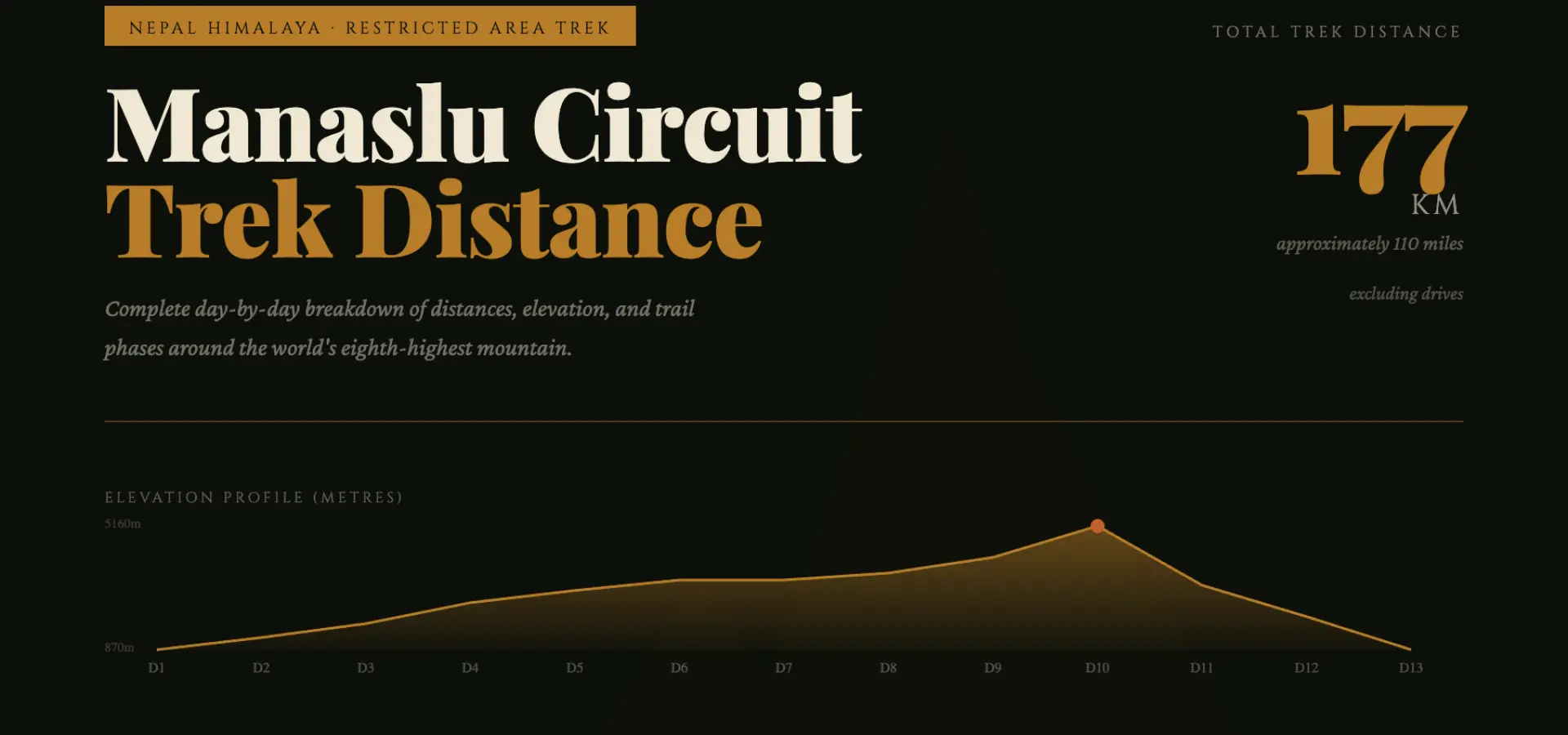
Manaslu Circuit Trek Distance | Day-by-Day Breakdown
The Manaslu Circuit Trek distance is one of the first things you want to understand before planning this remote Himalayan adventure. At first glance, the total distance, around 130–180 km, may seem straightforward. But in reality, the Manaslu Circuit Trek distance is shaped by altitude, terrain, acclimatization days, and route variations, making it far more dynamic than just a number on paper.
Circling the majestic Mount Manaslu, this trek takes you through deep river gorges, dense forests, traditional Tibetan-influenced villages, and high alpine landscapes before crossing the dramatic Larke Pass (5,106 m). The Manaslu route remains less crowded and more raw, which makes understanding the daily trekking distance even more important for proper planning.
In this guide, you’ll find a complete breakdown of the Manaslu Circuit Trek distance over a 13-day itinerary. It also includes how many kilometers you walk each day, which sections feel the longest, and how altitude impacts your pace. Knowing the distance helps you prepare physically, manage expectations, and enjoy the journey without surprises.
What is the Total Distance of the Manaslu Circuit Trek?
The total distance of the Manaslu Circuit Trek is 130–180 km (80–112 miles), depending on route variations and side trips. A standard 13-day itinerary typically covers around 140 km, including the Larke Pass crossing and gradual ascent through remote Himalayan villages and diverse landscapes.
How Many Kilometers Do You Walk Each Day on the Manaslu Circuit?
You will walk an average of 10–15 km per day on the Manaslu Circuit Trek. Distances vary depending on altitude, terrain, and acclimatization needs. Shorter days occur at higher elevations, while lower-altitude sections may involve longer but easier walking distances.
The full route forms a natural loop around Mount Manaslu, starting in the lowland river valleys and gradually climbing into high alpine terrain before descending toward the Annapurna region. Because of this variation in terrain and elevation, the total trekking distance changes slightly depending on how you structure your itinerary.
A key factor influencing the Manaslu Circuit Trek distance is where you start and end your trek. Some itineraries begin earlier and include longer walking sections in the lower Budhi Gandaki valley, while others use jeep access to skip certain parts, reducing the overall distance. Similarly, the endpoint can vary; some finish at Tilje or Dharapani and drive out, while others continue walking further along the Annapurna Circuit.
Another important element is acclimatization and side trips. Many want to include extra hikes from Samagaon, such as visiting Manaslu Base Camp or Birendra Lake. These optional excursions add extra kilometers but are highly recommended for both acclimatization and experience.
It’s also worth noting that the Manaslu Circuit Trek distance doesn’t feel the same throughout the journey. Early sections may cover longer distances through subtropical forests and villages, while higher sections involve shorter but slower walks due to altitude and rugged terrain. This makes the trek feel more balanced despite the overall length.
In practical terms, the Manaslu Circuit Trek distance is less about the total kilometers and more about how those kilometers are distributed across elevation, terrain, and time. Understanding this helps you plan realistically, pace yourself properly, and enjoy the journey without focusing only on numbers.
What is the Longest Day on the Manaslu Circuit Trek?
The longest and most challenging day is crossing Larke Pass, covering approximately 16 km from Dharamsala to Bimthang. This trek takes 8–10 hours, involving a steep ascent to 5,106 meters followed by a long descent to 3,700 m. Lots of ups and downs make this day the most physically demanding day.
This section begins before sunrise from Dharamsala to take advantage of stable morning weather, as winds tend to intensify later in the day. The trail climbs steadily over glacial moraine and rugged terrain, with thinner air making every step feel slower and more effortful.
Reaching Larke Pass at 5,106 meters is a major milestone, but it is only halfway through the challenge. After the pass, trekkers face a long and often tiring descent toward Bimthang. where loose rocks and changing trail conditions require careful footing. The combination of altitude, duration, and terrain makes this day physically and mentally demanding.
Proper pacing, early departure, and good acclimatization are essential for completing this section safely. While it is the toughest day of the trek, it is also one of the most rewarding, offering expansive Himalayan views and a strong sense of achievement.
What is the Shortest Trekking Day on the Manaslu Circuit?
The shortest trekking day is typically Samagaon to Samdo. The total trekking distance is only around 8 KM. Without a side hike, it will be around 10 KM. This shorter distance helps you adjust to altitude and reduces the risk of altitude sickness.
This shorter day plays a critical role in helping your body adjust to thinner air. Instead of covering long distances, trekkers often take optional hikes to nearby viewpoints, glacial lakes, or base camp areas. These light excursions improve acclimatization while keeping the body active.
From a planning perspective, this is also one of the most flexible days. You can choose to rest completely, explore the surrounding landscape, or take a short hike, depending on your energy levels. Even though the distance is minimal, this day is essential for maintaining a safe pace and increasing your chances of successfully crossing the high mountain pass later in the trek.
Manaslu Circuit Trek Distance Breakdown (13-Day Itinerary)
- Day 1: Drive from Kathmandu to Maccha Khola Distance
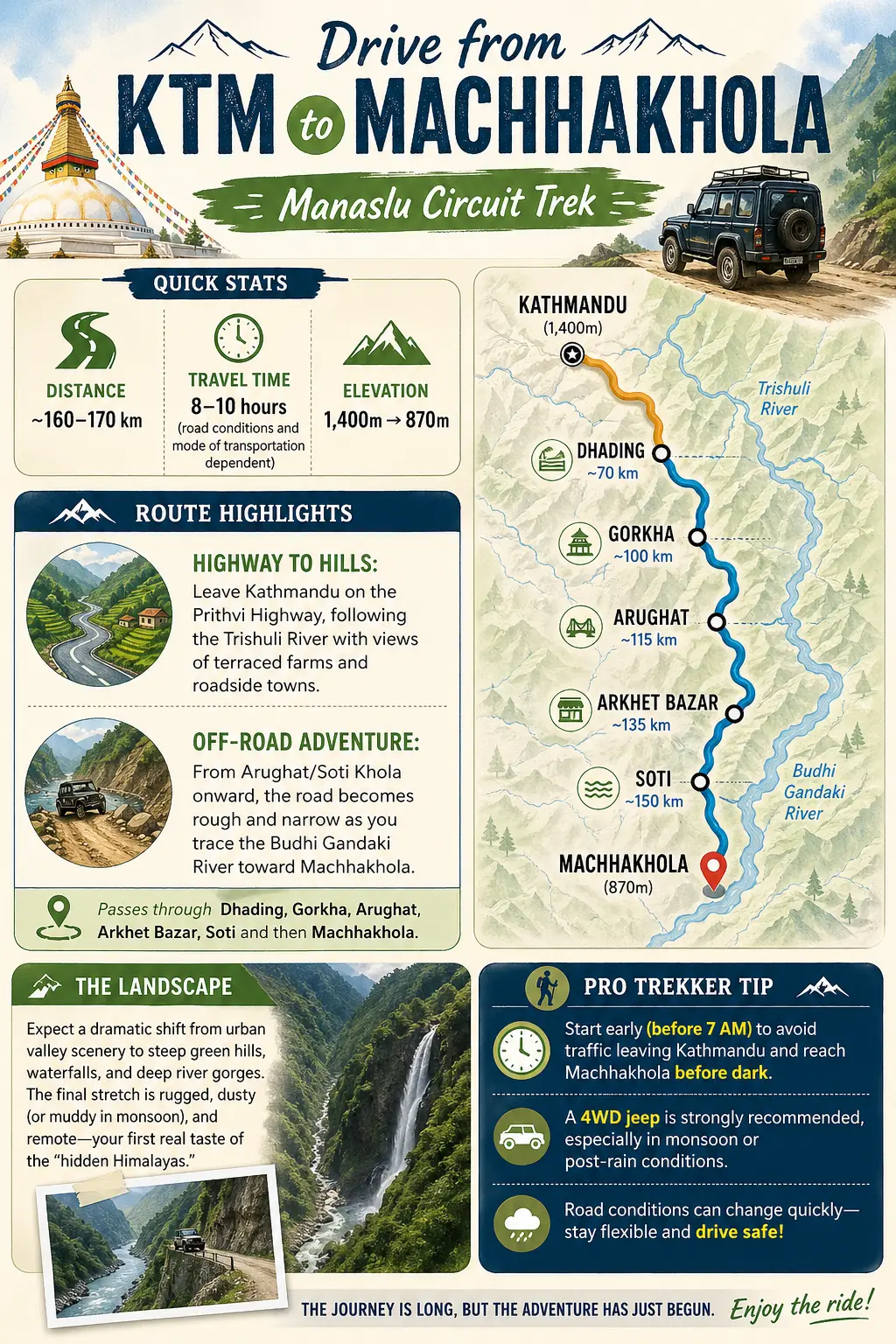
The drive from Kathmandu to Maccha Khola covers approximately 160-170 km and takes around 7-9 hours. The journey begins on a paved highway but gradually shifts to rougher roads as you move closer to the trailhead. Along the way, you pass through scenic hills, rivers, terraced farmland, and small rural settlements, offering your first glimpse into remote Himalayan life.
- Day 2: Trek from Maccha Khola to Jagat Distance
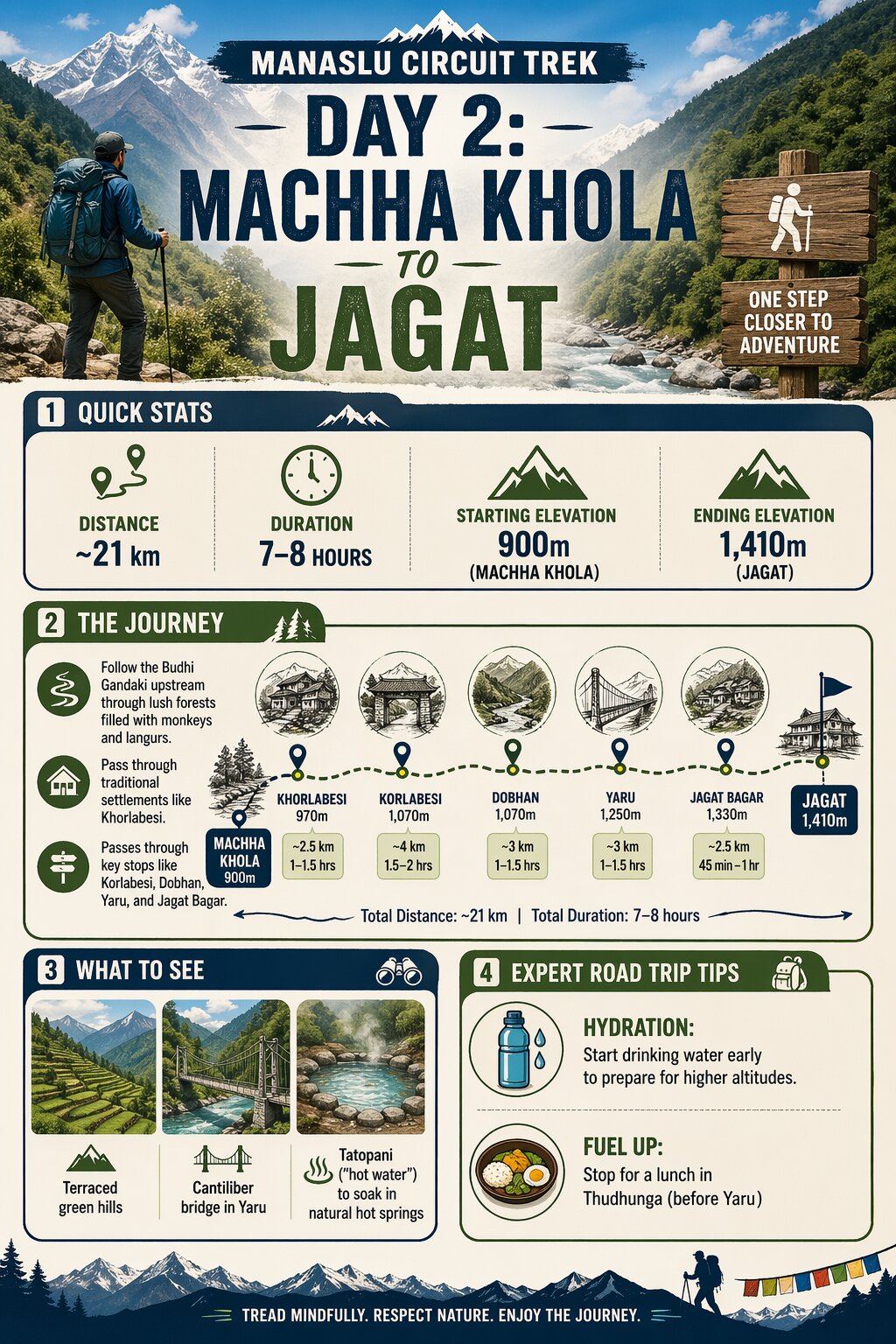
This day’s trek covers around 14–16 km and takes 6-7 hours. The trail closely follows the Budhi Gandaki River, with frequent ups and downs, suspension-bridge crossings, and small villages along the way. You gradually gain elevation while walking through narrow paths and lush surroundings before reaching Jagat, the official entry point to the restricted Manaslu region.
- Day 3: Trek from Jagat to Deng Distance
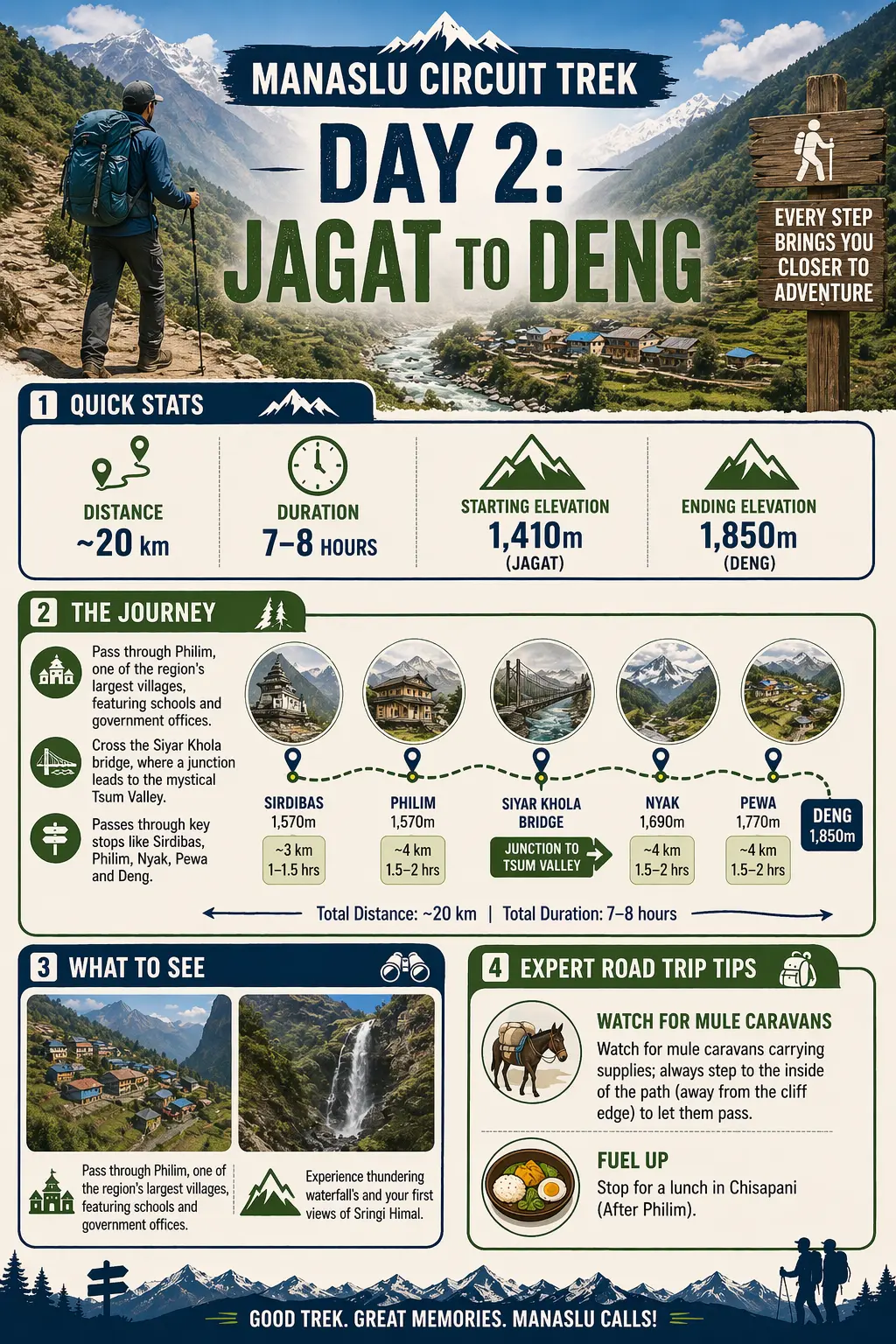
You’ll cover approximately 18–20 km in 6–8 hours. The trail involves a mix of ascents and descents through forests, riverbanks, and traditional villages like Philim and Ghap. As you progress, the valley narrows, and the environment becomes more remote, with increasing signs of Tibetan-influenced culture and fewer modern facilities.
- Day 4: Trek from Deng to Namrung Distance
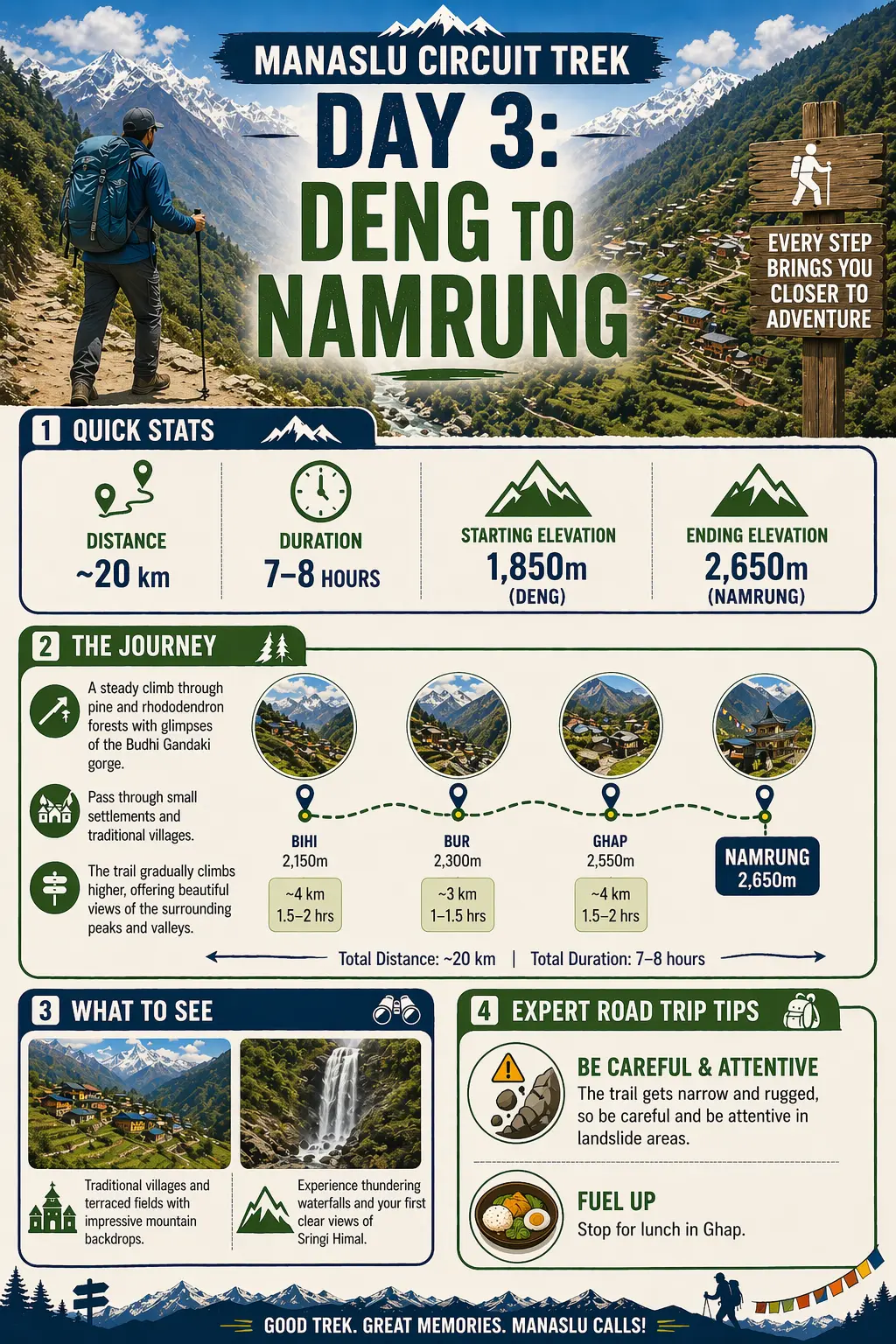
This day includes 19–20 km of trekking, taking about 6-7 hours. The trail winds through dense forests, crosses several streams, and passes mani walls and chortens. As you gain altitude, the landscape opens up, and you may start to see distant Himalayan peaks, making the day both physically rewarding and visually engaging.
- Day 5: Trek from Namrung to Shyala Distance
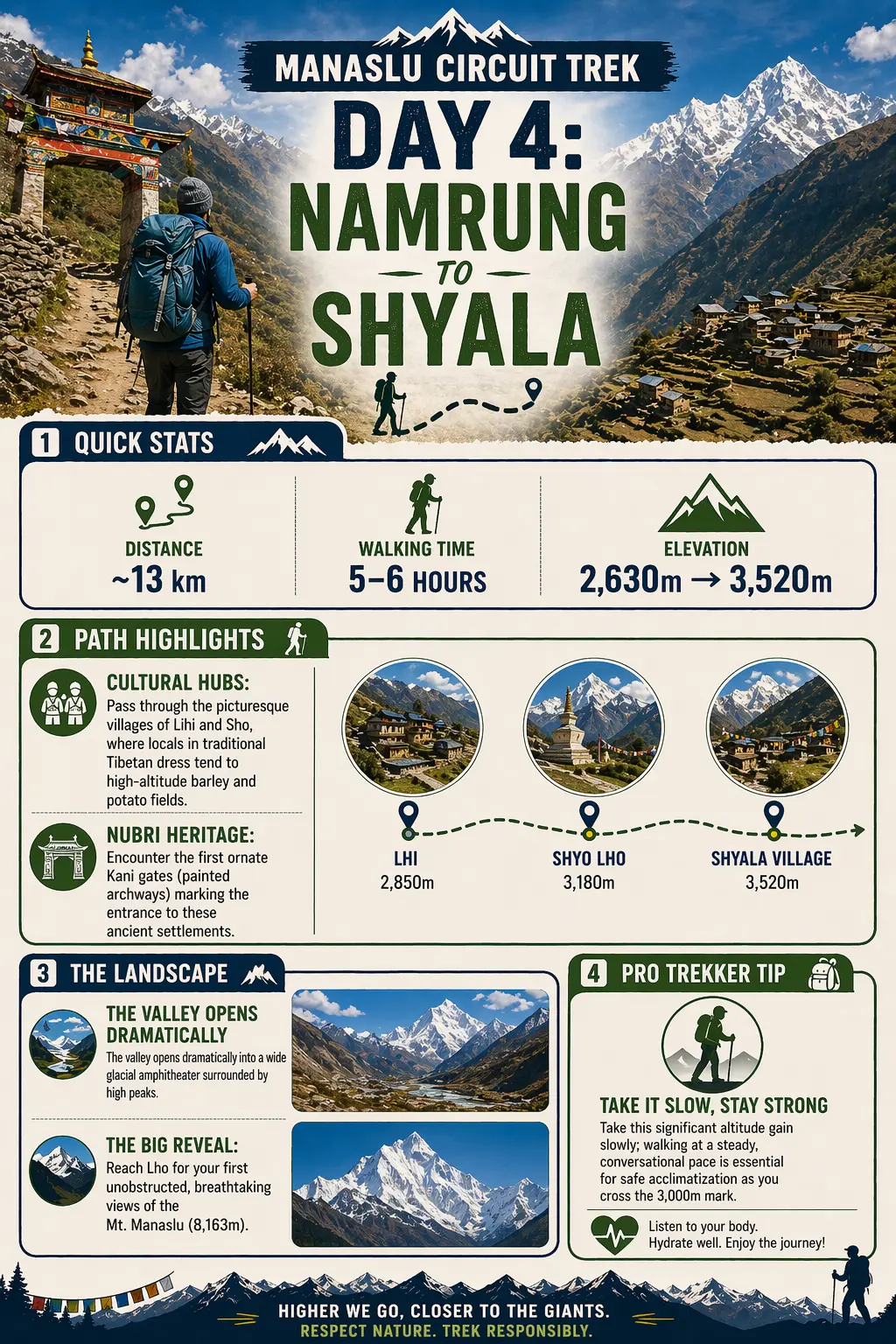
The trek from Namrung to Shyala covers around 12–14 km and takes 5–6 hours. You pass through charming villages like Lho, where you will enjoy stunning views of Mount Manaslu. The trail becomes more open and scenic, with wide valleys and panoramic mountain views leading you to Shyala, one of the most picturesque stops on the trek.
- Day 6: Trek from Shyala to Samagaon via Pungyen Distance
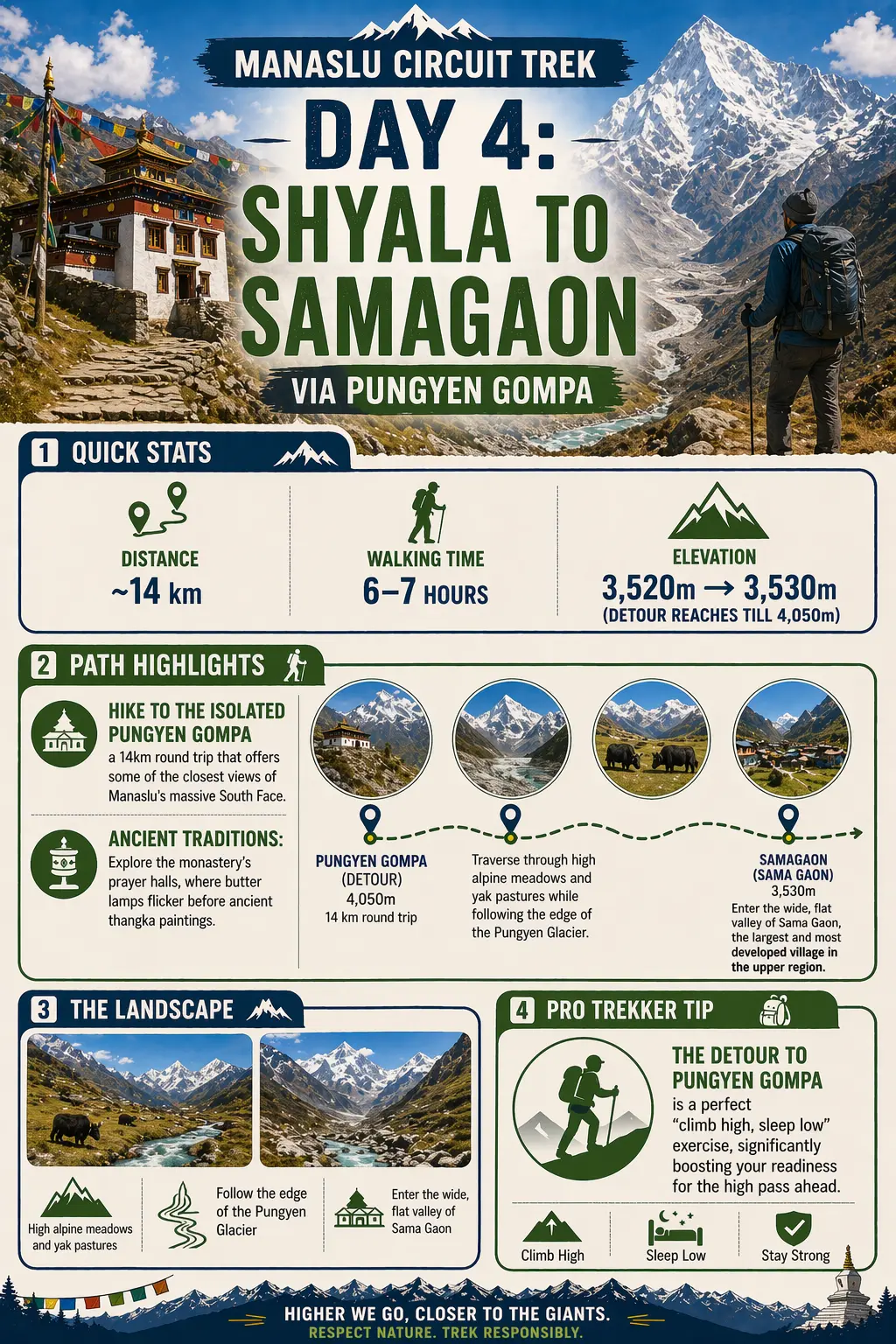
This day covers approximately 10–12 km and takes 4–5 hours. The route includes a scenic detour toward Pungyen Gompa, offering close-up views of glaciers and surrounding peaks. After exploring the area, the trail descends gently to Samagaon, a large and culturally rich village that serves as a key acclimatization stop.
- Day 7: Acclimatization Day Distance in Samagaon
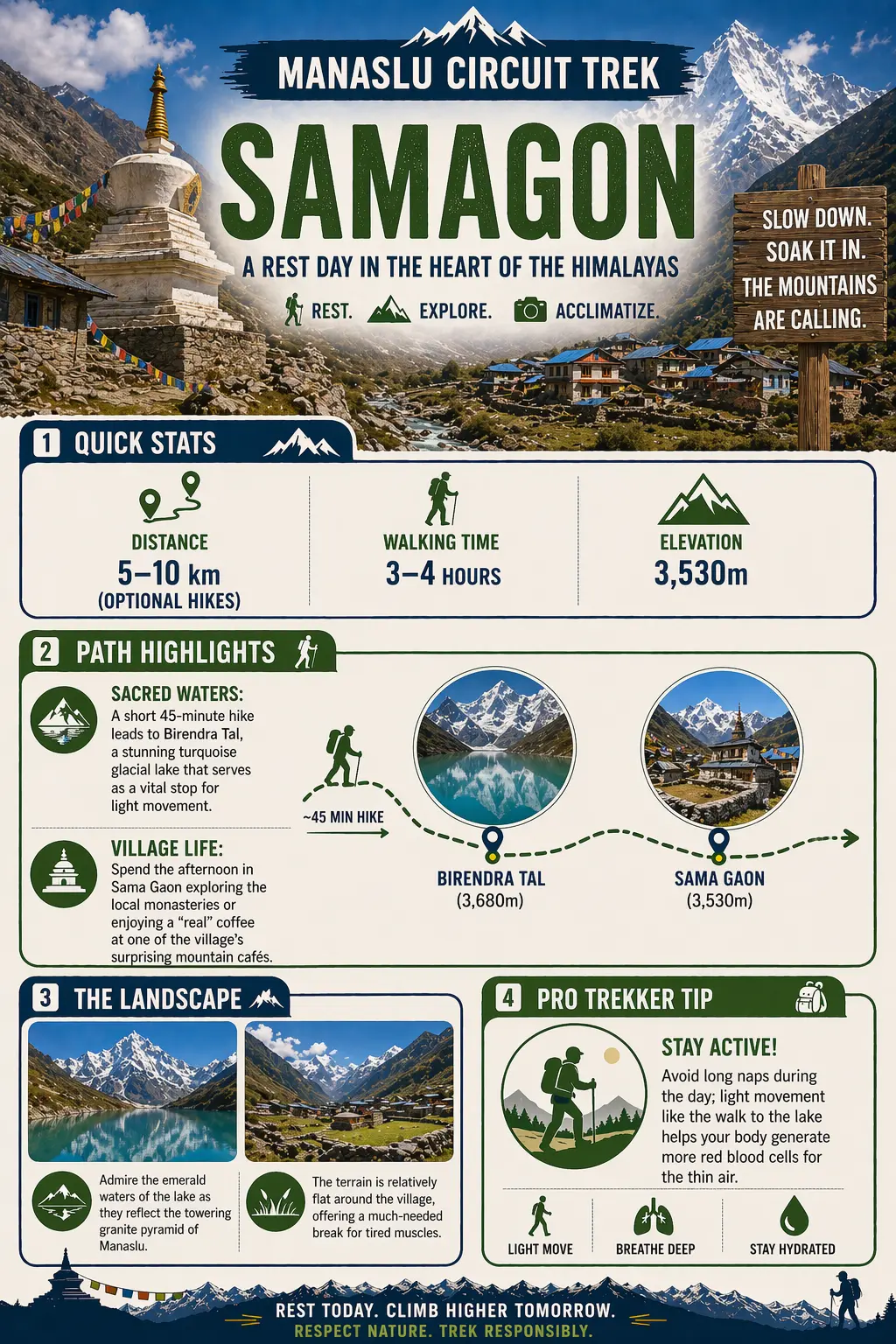
On this day, you will walk 6–10 km depending on your chosen hike. Popular options include a trek to Manaslu Base Camp or a shorter hike to Birendra Lake. These walks are essential for acclimatization, helping your body adjust to altitude while rewarding you with spectacular views of glaciers, icefalls, and towering peaks.
- Day 8: Trek from Samagaon to Samdo Distance
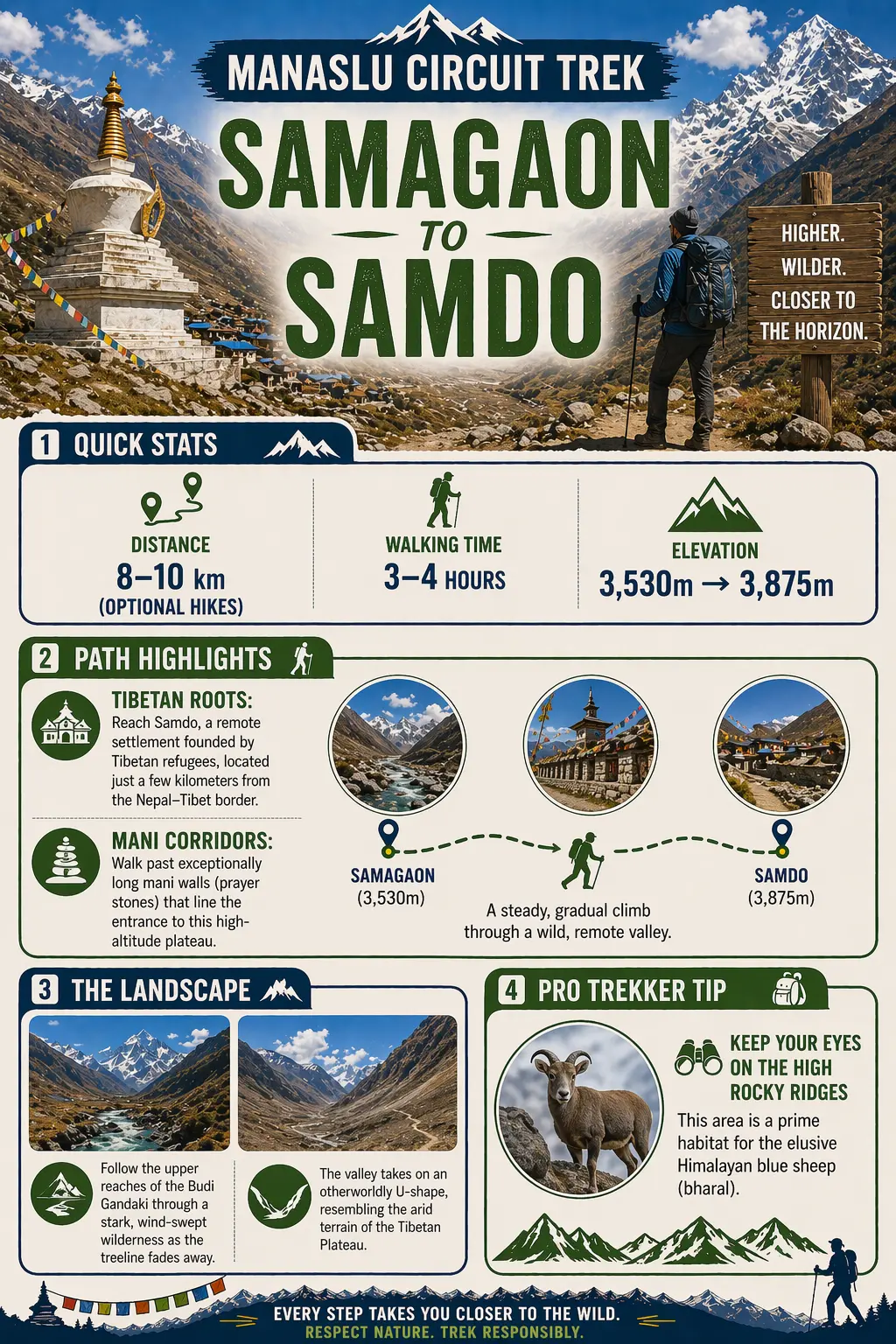
The trek from Samagaon to Samdo is 7–9 km and takes 3–4 hours. The trail is relatively gentle, following a wide, open valley with minimal vegetation. As you gain altitude, the environment becomes more rugged and windswept, and you’ll notice the increasing influence of Tibetan culture in this high-altitude region.
- Day 9: Trek from Samdo to Dharamsala Distance
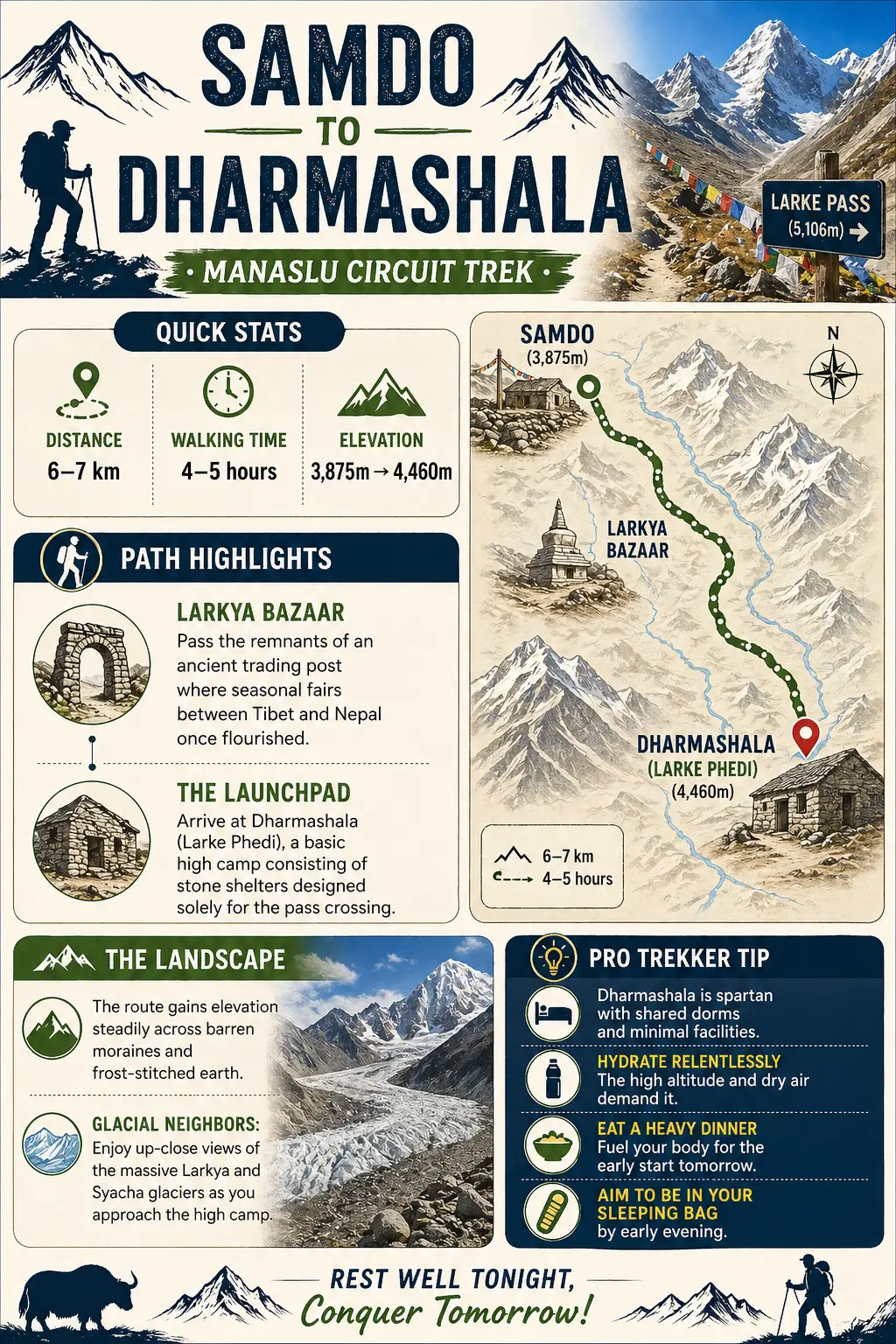
This short but important day covers around 6–8 km in 3–4 hours. The trail gradually ascends over rocky terrain toward Dharamsala, also known as Larke Phedi. This stop is crucial for rest and preparation before the challenging Larke Pass crossing the following day.
- Day 10: Trek from Dharamsala to Bimthang Distance via Larke Pass
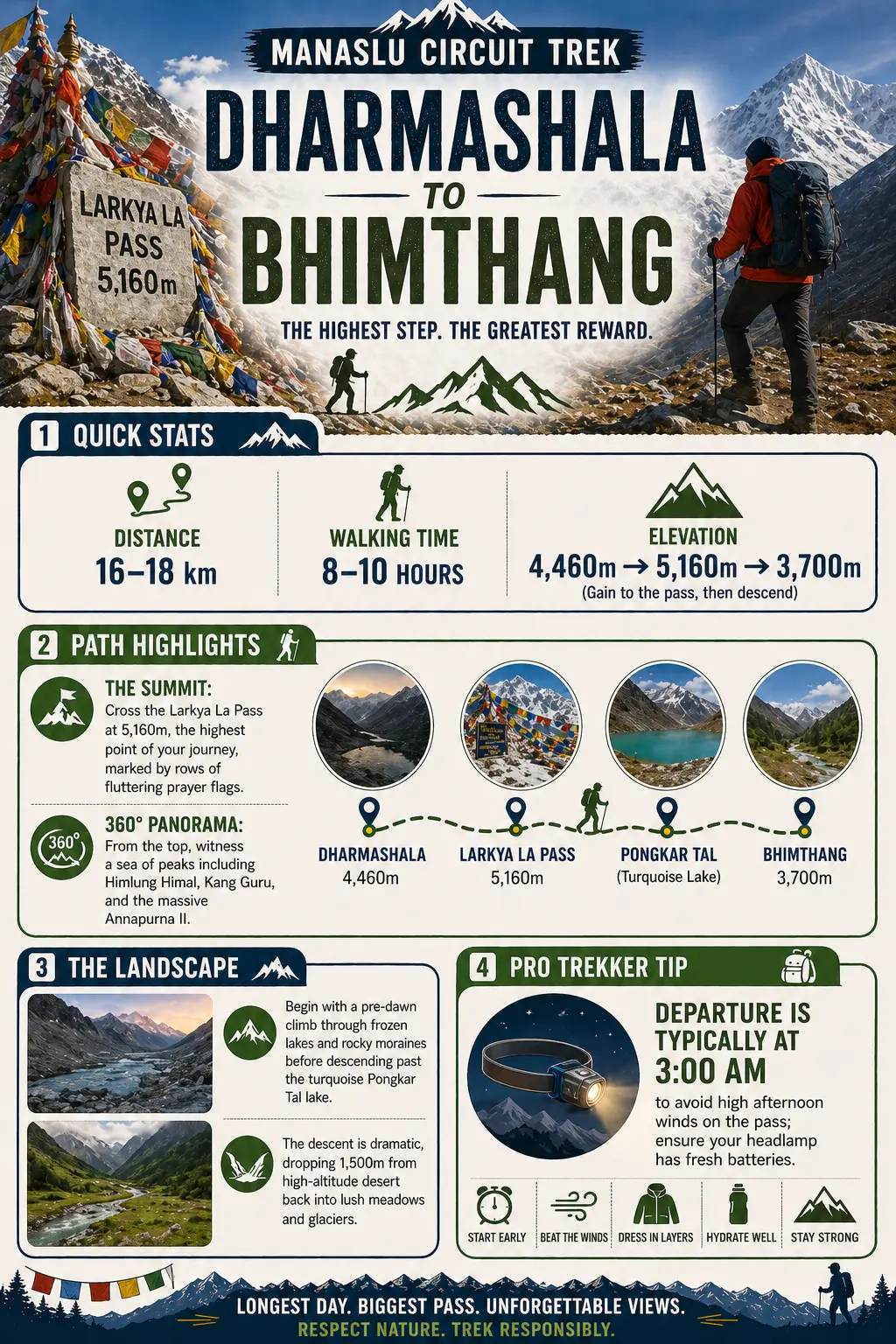
This is the longest and most demanding day, covering approximately 20–24 km in 8–10 hours. You begin early to cross Larke Pass (5,106 m), facing steep climbs, cold temperatures, and strong winds. After reaching the pass, a long descent brings you into the beautiful valley of Bimthang, surrounded by snow-capped peaks.
- Day 11: Trek from Bimthang to Gowa Distance
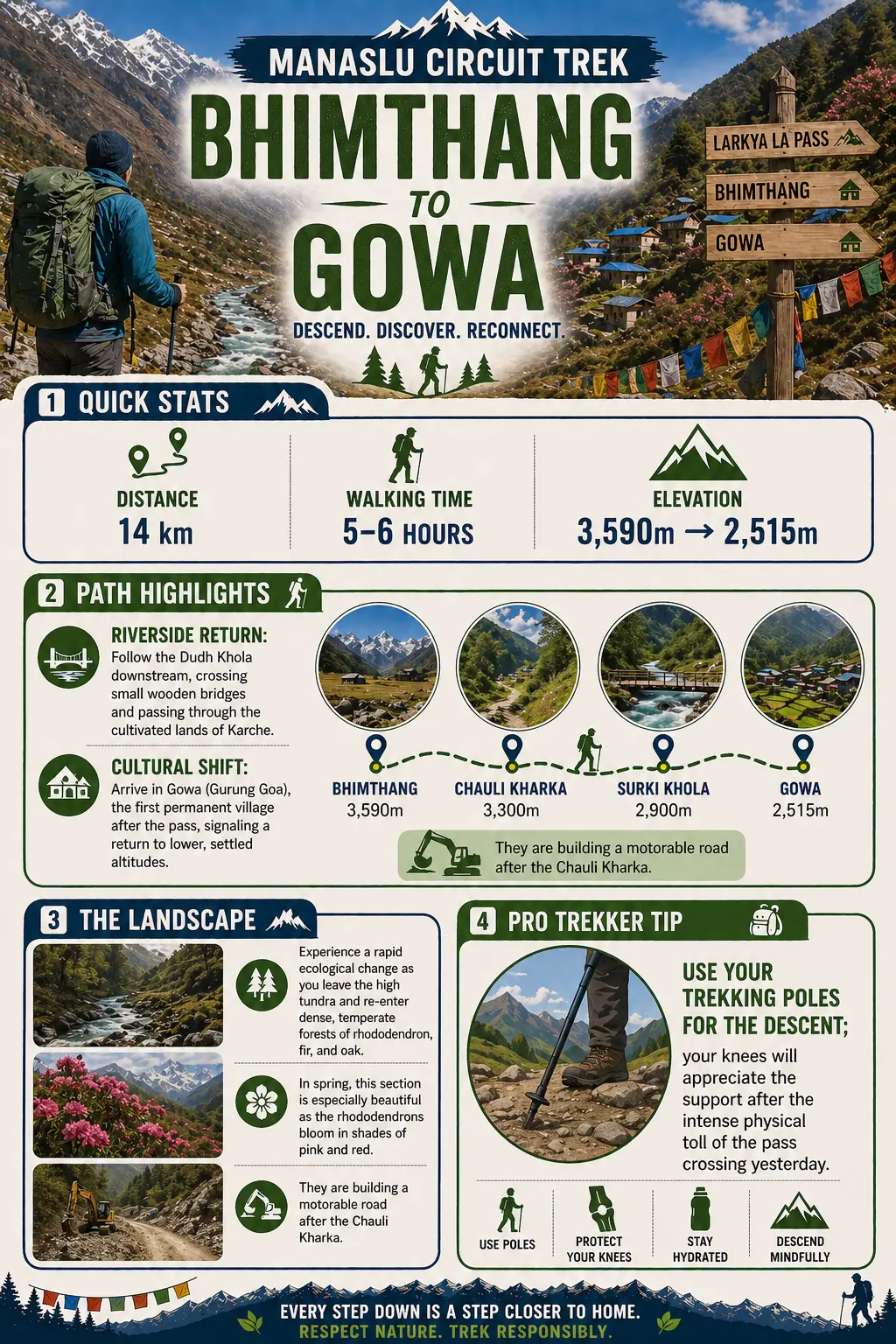
The trek from Bimthang to Gowa covers around 12–14 km and takes 5–6 hours. The trail descends through alpine meadows, pine forests, and alongside rivers. With decreasing altitude, breathing becomes easier, and the landscape shifts from rugged high mountains to greener, more fertile terrain.
- Day 12: Trek from Gowa to Dharapani Distance
This day involves 12–14 km of trekking, taking 5–6 hours. The route passes through traditional villages, terraced fields, and forested paths before reaching Dharapani. Here, the trail merges with the Annapurna Circuit, marking the final stretch of your trekking journey.
- Day 13: Drive from Dharapani to Kathmandu Distance
The return drive covers approximately 200–220 km and takes 8–10 hours. The journey includes a mix of rough mountain roads and smoother highways via Besisahar. As you descend back to Kathmandu, you’ll pass through diverse landscapes, bringing your Manaslu Circuit adventure to a memorable close.
How Does Distance Affect Difficulty on the Manaslu Circuit?
Distance alone does not determine difficulty on the Manaslu Circuit Trek. Altitude, terrain, and weather play a major role. Even short distances at high elevation can feel challenging due to low oxygen levels, while longer distances at lower altitudes are generally easier to manage.
On the Manaslu Circuit, distance plays a surprisingly secondary role in determining how hard a day feels. What matters more is how those kilometers are distributed, specifically the elevation gain, trail conditions, and altitude you’re walking at. A 10 km stretch with steep ascents and thin air can feel far more exhausting than a 15 km walk on gradual terrain.
As you move higher along the circuit, oxygen levels drop significantly. This slows your pace, increases fatigue, and requires more frequent breaks, even on shorter days. Your body is working harder with every step, which makes even modest distances feel longer and more demanding.
Terrain also has a major influence. Rocky paths, narrow trails, suspension bridges, and landslide-prone sections require careful footing and mental focus. This reduces walking speed and adds to physical strain, especially when combined with long ascents or descents.
Another key factor is cumulative fatigue. The trek spans nearly two weeks, so your energy levels build and drop over time. A distance that feels easy early in the trek may feel much harder after several consecutive days of walking.
In essence, on the Manaslu Circuit, difficulty is shaped less by the number of kilometers and more by altitude, elevation gain, and terrain complexity. It also depends upon how well your body adapts along the journey.
How Much Elevation Gain is Covered Along the Distance?
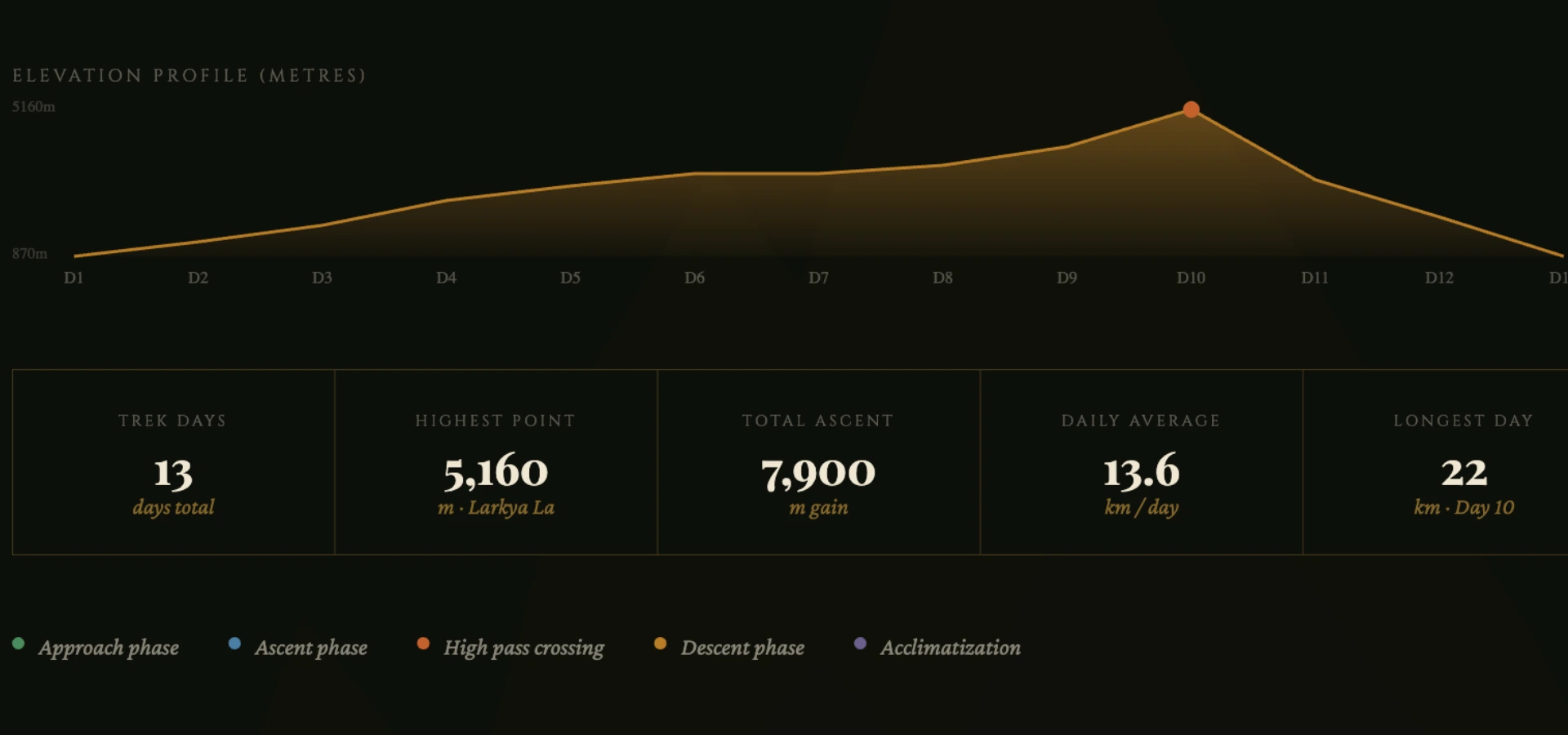
The Manaslu Circuit Trek involves a total elevation gain of approximately 5,000–5,500 meters. The highest point is Larke Pass at 5,106 meters. Gradual ascent and acclimatization days help you adapt to altitude while covering significant vertical distance over the journey.
You begin in subtropical surroundings and move upward through forests, then into sparse, rugged landscapes before reaching the high mountain zone near the pass.
What makes this elevation gain manageable is its pacing. The route is designed to allow your body time to adapt, with shorter trekking days introduced as you go higher. This staged ascent helps reduce the strain that comes with climbing too quickly, which is critical in high-altitude environments.
However, the gain isn’t perfectly smooth. There are multiple sections where you descend before climbing again, meaning you often “regain” elevation. These repeated ups and downs add to the overall effort and can feel more tiring than a continuous climb.
As altitude increases, each step requires more energy due to reduced oxygen levels. This changes your walking rhythm; you slow down, breathe more deeply, and take more breaks. So while the vertical gain is spread out, it becomes progressively more noticeable the higher you go.
In practical terms, the elevation gain shapes how you experience the trek: it influences your pace, your rest days, and how your body responds each day. Understanding this helps you prepare better and move more efficiently throughout the journey.
Can You Shorten the Manaslu Circuit Trek Distance?
Yes, the Manaslu Circuit Trek distance can be shortened by adjusting the itinerary or using jeep transport in lower sections. Some trekkers skip parts of the trail or combine walking days. However, reducing distance may affect acclimatization and the overall trekking experience.
Another approach is to compress the itinerary by combining shorter trekking days into longer ones. This reduces the total number of days but increases daily effort. It works best for trekkers who are already acclimatized or have prior high-altitude experience.
Some itineraries also exit the trail earlier after crossing Larke Pass, avoiding the full descent toward Dharapani. While this trims distance, it may involve arranging transport from more remote locations, which can be less predictable.
That said, shortening the route comes with trade-offs. Fewer days on the trail can limit gradual altitude adaptation, increase fatigue, and reduce time to experience the cultural and scenic highlights along the way. The Manaslu Circuit is designed with a natural rhythm, so any reduction should balance efficiency with safety and overall experience.
What Extra Distance Do Side Trips Add?
Side trips on the Manaslu Circuit Trek add approximately 20–50 km to the total distance. Popular excursions include Tsum Valley, Serang Gompa, Kal Tal, Pungyen Gompa, Manaslu Base Camp, Birendra Lake and the Tibetan Border. These optional hikes enhance the experience with close-up mountain views but require additional time and energy.
These detours typically branch off from main villages, most commonly around Samagaon and Tsum Valley. The added distance is walked as a round trip rather than progressing forward along the circuit.
What makes these extra kilometers feel different is the terrain and elevation profile. Many side hikes involve steep ascents toward viewpoints, glacial lakes, or base camp areas. This means the added distance often demands more effort per kilometer compared to the main trail, especially as you are already at high altitude.
Timing also matters. While they extend your walking distance for the day, they don’t disrupt the overall itinerary. Instead, they enhance it by improving altitude adaptation and offering closer, more dramatic mountain perspectives.
In practical terms, these additions are flexible. You can choose shorter or longer options depending on your energy level, weather conditions, and how well you are acclimatizing. The key point is that side trips aren’t just extra distance; they’re strategic and experiential extensions of the trek.
At Last, Is the Manaslu Circuit Trek Distance Worth It?
The Manaslu Circuit Trek distance may sound long on paper, but in reality, it is well-paced and thoughtfully structured for gradual acclimatization. With an average of 10–15 km per day, the trek is less about covering huge distances and more about adapting to altitude, enjoying the landscape, and maintaining a steady rhythm.
What makes the Manaslu Circuit Trek distance truly special is how diverse every kilometer feels, from lush river valleys to high mountain passes and remote Himalayan villages. Unlike more commercial trekking routes, this trail offers a sense of isolation and authenticity that transforms the journey into more than just a physical challenge.
For those who prepare well and respect the altitude, the Manaslu Circuit Trek distance is not only manageable but deeply rewarding. It strikes the perfect balance between adventure and accessibility, making it one of Nepal’s most unforgettable long-distance treks.
Popular Posts


- What is the Total Distance of the Manaslu Circuit Trek?
- How Many Kilometers Do You Walk Each Day on the Manaslu Circuit?
- What is the Longest Day on the Manaslu Circuit Trek?
- Manaslu Circuit Trek Distance Breakdown (13-Day Itinerary)
- How Does Distance Affect Difficulty on the Manaslu Circuit?
- How Much Elevation Gain is Covered Along the Distance?
- Can You Shorten the Manaslu Circuit Trek Distance?
- What Extra Distance Do Side Trips Add?
- At Last, Is the Manaslu Circuit Trek Distance Worth It?
