


Trip Introduction
Overview of Botanical Treks in Nepal | 9 Days Itinerary
Imagine walking through lush forests where every turn reveals a burst of color. You will pass through the vibrant rhododendrons, delicate orchids, and rare herbs hidden in the undergrowth. Botanical treks in Nepal are a paradise for nature lovers, blending adventure with the quiet joy of discovery. Whether you are trekking through the alpine meadows or the subtropical jungles, the diversity of flora will leave you in awe. Each season paints the trails differently, from spring’s wildflower carpets to autumn’s golden hues.
These treks are not just about the views, but they are a chance to connect with Nepal’s natural heritage. Local guides share stories of medicinal plants, while butterflies and birds add life to the scenery. Whether you are a botanist, photographer, or simply someone who loves the outdoors, every step feels like unwrapping a gift from nature. Slow down, breathe in the crisp mountain air, and let the wilderness surprise you. After all, the best journeys are those where the journey itself is the destination.
Why Botanical Treks in Nepal?
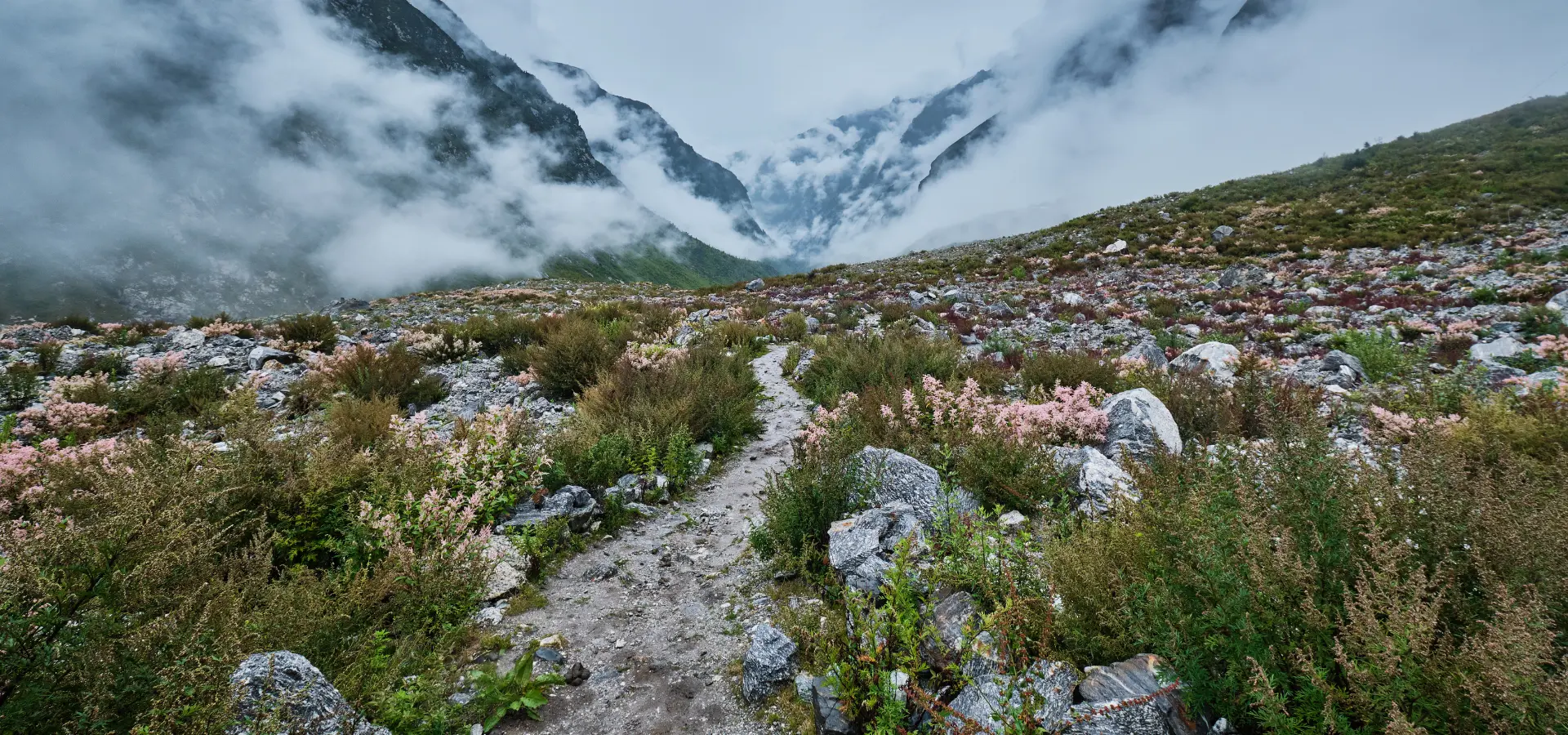
Nepal is not just about towering peaks; it is a paradise for plant lovers, where every trail tells a story of nature’s ingenuity. From subtropical jungles to alpine meadows, the country’s dramatic elevation shifts create a botanical wonderland. Nepal is home to over 6,500 species of flowering plants, including exotic medicinal herbs, vibrant primulas, and the elusive blue poppy.
On a botanical trek, you will not only witness breathtaking landscapes but also uncover the deep connection between Nepal’s flora and its people. Here, the plants are used for healing, food, and even spiritual rituals. Whether you are a passionate botanist, a photography enthusiast, or simply seeking a deeper experience, the treks offer a unique blend of adventure, discovery, and tranquility. Walk slowly, breathe deeply, and let Nepal’s natural magic reveal itself: one petal, one leaf, and one mountain vista at a time.
Who will be Interested?
For those who find magic in the whisper of leaves and the quiet resilience of alpine flowers pushing through mountain cracks, Nepal’s botanical treks offer more than just a walk. Picture the plant enthusiast crouching in wonder, their delicate petals fluttering like butterfly wings against the stark Himalayan rock. These journeys call to the curious souls who want to understand how a single valley can transition from subtropical orchids to hardy edelweiss within a day’s hike.
They are for the cultural storytellers who pause not just to identify a medicinal herb but to listen to a Tamang grandmother explain how her ancestors used it to cure fevers. For the weary city dweller seeking solace in the ritual of forest bathing, where the scent of pine resin and earth becomes therapy. For teachers who want their students to touch the bark of a tree rather than just read about it in textbooks. These treks welcome those who measure their journey not in miles conquered, but in moments of connection. You can enjoy the trek with a rare red panda sighting, a shared pot of nettle soup with locals, or the simple joy of identifying their first Himalayan primrose.
This is for those who believe the true essence of travel lies not in checking off destinations, but in letting a place change you. One blossom, one conversation, and one sunlit trail at a time will be enough to make your trip unforgettable. After all, to walk through Nepal’s botanical wonderland is to remember we are but one small, wondrous part of nature’s grand design.
Best Season for Botanical Treks in Nepal
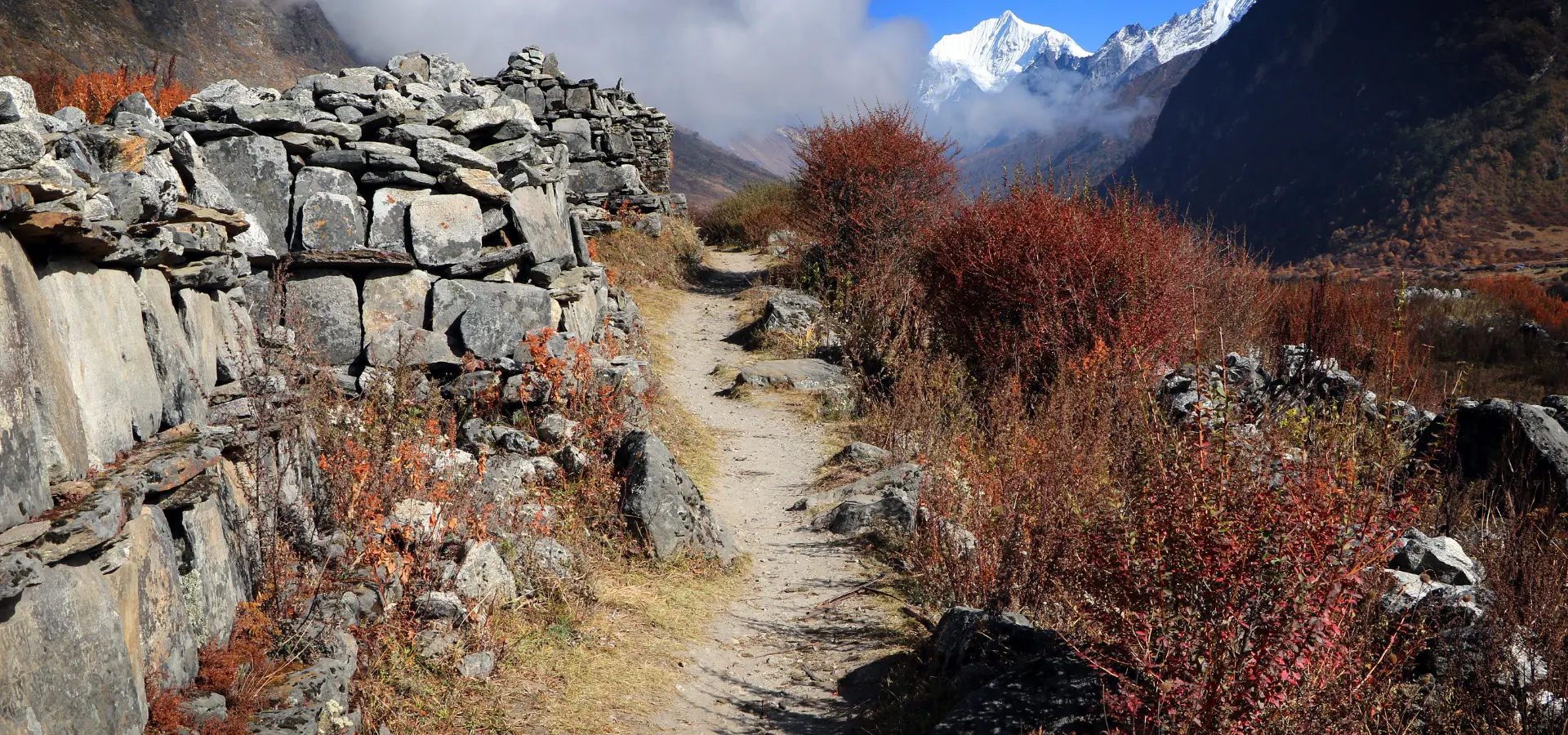
Nepal’s botanical treasures reveal themselves in different moods throughout the year, but two seasons stand out for those seeking nature’s most spectacular displays. From March to May, spring transforms the Himalayas into a living watercolor painting. You can see varieties of rhododendrons, which are also the national flower of Nepal. It explodes in fiery shades of red, pink, and white, blanketing hillsides from lower valleys to 4,000-meter elevations. This is when rare orchids peek from mossy tree trunks, magnolias perfume the air, and the elusive blue poppy makes its brief, magical appearance. Days are pleasantly warm, with crisp mornings ideal for walking, while occasional showers make every leaf glisten.
Autumn offers a different kind of botanical wonder. The monsoon’s retreat leaves the landscape lush and vibrant, with maple forests and fields of wildflowers. This is prime time for high-altitude blooms like gentians and edelweiss. The lower valleys shimmer with ripening buckwheat and millet. The air is crystal clear, revealing jaw-dropping mountain vistas framed by autumn foliage.
While winter (December-February) brings quiet beauty with frost-kissed junipers and dramatic landscapes, summer (June-August) offers emerald-green rice terraces and cascading waterfalls. Spring and autumn remain unbeatable for those chasing Nepal’s most breathtaking floral spectacles.
Pro tip: For dedicated botanists, visiting in both seasons reveals entirely different plant worlds along the same trail!
Permit Costs for Botanical Treks in Nepal
Exploring Nepal’s floral wonders does require some permits, but the fees are modest and go toward conserving these beautiful landscapes. Langtang National Park is home to stunning rhododendron forests and alpine meadows. Foreign trekkers need to pay NPR 3,000 (about USD 24) for a park entry permit. This permit is valid for the duration of your trek and can be obtained at the park entrance in Dhunche. Godawari Botanical Garden is a paradise of orchids, ferns, and exotic plants, with the entry fee being just NPR 50 (less than USD 0.5) for Nepali visitors and NPR 400 (around USD 3) for foreigners.
These small fees are a worthwhile investment, as they help maintain trails, protect endangered plant species, and support local communities. The Langtang permit also includes access to the park’s rich biodiversity, from rare medicinal herbs to vibrant birdlife. Just remember to carry cash (in Nepali rupees) and keep your permits handy. A small price for the unforgettable experience of walking through Nepal’s living gardens!
Itinerary of Botanical Treks in Nepal | 9 Days Itinerary
Your botanical journey begins in Kathmandu (1,400m) with an immersive visit to the Godawari Botanical Garden. After breakfast, we will drive around 14km southeast through the Kathmandu Valley’s patchwork of terraced fields to reach this 82-hectare living museum. This garden features meticulously curated sections, which is established in 1962.
- The Orchid House with over 400 native species
- Rhododendron Collection showcasing 25+ varieties
- Medicinal Plant Section displaying traditional Ayurvedic herbs
- Japanese Peace Garden with ornamental ponds
Botany enthusiasts should bring notebooks to document species like the delicate Cypripedium himalaicum (Himalayan lady’s slipper orchid) and towering Rhododendron arboreum (national flower). We will enjoy a picnic lunch among the flowering magnolias before returning to Kathmandu for gear checks and a traditional Newari welcome dinner.
Our 7-9 hour journey north reveals Nepal’s dramatic ecological transitions. Departing at 7 AM, we’ll:
- Pass through the bustling town of Trishuli, noting the shift from urban to rural landscapes
- Stop at Dhunche (1,950m) for lunch and Langtang National Park permit checks
- Descend through subtropical forests to the Trisuli River Valley
- Navigate the final winding 22km to Syabrubesi, where the Langtang Khola and Bhote Koshi rivers converge
As we wind our way along the serpentine mountain roads toward Syabrubesi, keep your camera ready for breathtaking vistas that showcase Nepal’s diverse landscapes. The route reveals a patchwork of terraced farms clinging to steep hillsides, where local farmers cultivate golden fields of maize and millet using traditional methods passed down through generations. During the monsoon season (June-August), the cliffs come alive with dozens of thundering waterfalls cascading down moss-covered rock faces. Some waterfalls are very close to the road, where you can feel their cool mist.
Watch for those magical moments when the clouds reveal snow-capped peaks glowing in the sunlight. These include the distinctive pyramid of Langtang Lirung (7,227m), which will be your constant companion during the coming trekking days. These ever-changing views provide a perfect introduction to the natural wonders awaiting you in the Langtang Valley.
Our trekking day begins with an energizing breakfast in Syabrubesi before crossing the swaying suspension bridge over the Bhote Koshi River. As we enter Langtang National Park’s lush lower elevations, the trail immediately immerses us in a living botanical textbook. The morning’s gradual ascent winds through dense stands of Himalayan chestnut and chir pine, their canopies alive with the chatter of scarlet minivets and Himalayan bulbuls. Watch your step along the rocky path as you might spot the vibrant Himalayan poison ivy with its distinctive trifoliate leaves, or delicate ground orchids peeking from mossy boulders.
By midday, we reach Bamboo Village, where we will pause for lunch at a family-run teahouse. Here, your guide will point out how local people use bamboo shoots for pickles and construction. Refreshed, we continue through the subtropical transition zone, where massive Himalayan oaks begin dominating the forest. These ancient trees were some over 150 years old with thick coats of epiphytic orchids and ferns, creating a magical hanging garden.
The afternoon trek rewards sharp-eyed botanists with sightings of:
- The fiery blooms of Rhododendron barbatum, identifiable by their peeling cinnamon bark
- Medicinal plants like the bright yellow Himalayan mayapple (Podophyllum hexandrum)
- Carnivorous Himalayan pitcher plants (Nepenthes spp.) in damp gullies
As daylight softens, we arrive at Lama Hotel’s cozy lodges.. After settling in, we wil gather to review the day’s plant sightings while dinner cooks over wood fires – the perfect end to our first trekking day immersed in Langtang’s incredible biodiversity.
Today’s 15-kilometer trek offers the most dramatic ecological transitions of your journey, taking us from dense forests into the alpine zone. We begin with a steady climb through enchanting old-growth forests where morning mist filters through towering silver fir and Himalayan birch trees. The forest floor reveals a botanical treasure hunt with patches of Paris polyphylla with its distinctive whorled leaves, and the occasional bright red Arisaema.
As we approach Ghoda Tabela (3,000m), the valley dramatically opens to reveal our first panoramic views of the Langtang Lirung massif. This sunny meadow, whose name means “horse stable,” makes an ideal rest stop. Watch for Himalayan griffons circling overhead. The trail then enters magical rhododendron cathedrals, where Rhododendron campanulatum trees grow to 10-meter heights, their bell-shaped flowers creating a crimson canopy in spring.
After lunch in Langtang Village, we witness nature’s resilience firsthand. Rebuilt after the 2015 earthquake, this traditional Tamang settlement now features stone houses decorated with Buddhist prayer flags. Our cultural immersion includes visiting a local home to see how they use stinging nettle for soups and rhododendron petals for traditional wine.
The final 2-hour push to Mundu (3,540 m) reveals the stark beauty of the alpine zone. The air grows crisper as we pass through stands of aromatic Juniperus indica, their blue berries used in local incense. Keep an eye out for the woolly Himalayan pika darting among rocks and the first appearances of high-altitude specialists like Saxifraga and Androsace growing in sheltered crevices. Arriving at Mundu’s sturdy stone guesthouses by late afternoon for an overnight.
Today’s shorter trek allows for an immersive exploration of the valley’s high-altitude ecosystems. The landscape transforms dramatically with juniper shrubs replace the towering rhododendrons of lower elevations. In protected hollows between boulders, delicate alpine specialists reveal themselves: clusters of sky-blue Gentiana ornata, woolly Saussurea gossypiphora (resembling tiny cotton balls), and the elusive Meconopsis horridula with its prickly silver leaves.
Our botanist guide will point out remarkable survival adaptations. The trail crosses several glacial streams where we might spot the hardy sea buckthorn with its bright orange berries, a vital food source for migrating birds.
By late morning, we reach Kyanjin Gompa’s picturesque valley. Here, the yaks graze among wild Potentilla flowers. After settling into our teahouse, we will visit the 400-year-old monastery to see its intricate murals of medicinal plants used in traditional Tibetan medicine. The afternoon offers two options: a hands-on cheese-making demonstration at the local dairy (famous for its yak milk products), or a guided botanical walk to study the valley’s unique microclimates. As the sun sets behind Langtang Lirung, we’ll gather around the dining room stove to review today’s findings, perhaps sipping tea made from locally harvested Rhododendron anthopogon leaves while our guide explains how climate change is affecting these fragile alpine ecosystems.
Our pre-dawn start (around 4 AM) begins with steaming cups of ginger tea as we prepare for the trek’s most rewarding challenge – the ascent to Tserko Ri. Wearing headlamps, we navigate through the silent, boulder-strewn moraines, where the crunch of frost underfoot gradually gives way to the first golden light kissing the Langtang Lirung’s icy summit. The initial two hours follow a steep but well-defined trail through alpine meadows dotted with resilient cushion plants like Arenaria bryophylla, their compact forms adapted to conserve heat and moisture in the thin air. As we climb above 4,500m, the vegetation becomes sparse but no less fascinating – keep an eye out for high-altitude specialists like the woolly Saussurea gossypiphora (nicknamed “snowball plant” for its cotton-like covering) and delicate Gentiana prolata with its vivid blue trumpet flowers peeking through rocky crevices.
The final 300-meter scramble to the summit (5,000m) rewards us with a breathtaking 360-degree panorama: the jagged Langtang Lirung to the east, Yala Peak’s glaciated dome to the north, and the Tibetan border ranges fading into the horizon. Here, at the rooftop of our botanical journey, your guide will point out how extreme adaptations allow plants to survive – from antifreeze proteins in Rhododendron nivale to the solar-tracking blooms of Potentilla arbuscula. After documenting these alpine survivors in our field journals, we descend carefully to Kyanjin Gompa (3,870m) by late morning, where a hot lunch awaits. The afternoon offers optional activities: visit the village’s cheese factory to sample yak cheese aged in Himalayan caves, or join a workshop comparing the medicinal properties of high-altitude plants (Rhododendron anthopogon for inflammation, Picrorhiza kurroa for digestion) with their lowland relatives observed earlier in the trek. As the sun sets behind the peaks, we’ll reflect on how these fragile ecosystems – where a single square meter may host a dozen microhabitats – exemplify nature’s remarkable resilience.
The morning air carries a bittersweet crispness as we begin our return journey from Kyanjin Gompa, retracing our steps through the valley with fresh eyes and a deeper appreciation for its botanical wonders. While the 21km distance may seem daunting, the gradual descent makes for surprisingly comfortable walking, allowing us to focus on details we might have missed during our ascent. The trail first leads us back across the ancient glacial moraines, where we can spot hardy alpine survivors like the woolly Saussurea gossypiphora clinging to rocky crevices.
As we descend below 4,000m, the landscape transforms dramatically with the juniper shrubs giving way to towering forests. The afternoon walk through Ghoda Tabela’s open pastures offers perfect opportunities to spot grazing yaks and the occasional herd of Himalayan thar. By late afternoon, the familiar wooden bridges and the sound of rushing rivers signal our approach to Lama Hotel. This evening carries special significance as our last night immersed in the Langtang wilderness. We will celebrate by sharing our most memorable botanical discoveries.
The final day of trekking begins with a bittersweet farewell to Lama Hotel as we retrace our steps down the Langtang Valley. The morning air carries the earthy scent of damp moss and pine as we descend through the familiar forests. Sunlight filters through the canopy, illuminating patches of wild strawberries and fern-covered boulders we might have overlooked before. Crossing the same suspension bridges over rushing glacial streams, we pause to spot colorful Siberian stonechats flitting among the riverside shrubs.
Local porters and mule trains pass by with cheerful greetings, their loads of supplies reminding us of the valley’s daily rhythms. By afternoon, the trail widens as we approach Syabrubesi, where the sight of terraced fields and the distant roar of the Bhote Koshi River is. This evening, we will celebrate our journey with the trekking crew over steaming plates of dal bhat and share stories about our favorite floral discoveries. Although our boots may be dusty, our notebooks are filled with sketches and observations that will keep the magic of Langtang’s living garden alive long after we return home.
The final day of our botanical adventure begins with an early departure from Syabrubesi. We retrace our route along the winding mountain roads, and the journey back to Kathmandu transforms into a moving reflection of our trek. We will be passing through vibrant villages where farmers tend to their terraced fields of maize and millet, crossing the same roaring river valleys we marveled at.
This 7-9 hour drive offers one last chance to spot flashes of brilliant hillsides or perhaps catch a final glimpse of a snow-capped peak. We will stop for lunch at a scenic riverside spot. Arriving in Kathmandu by late afternoon, there is time to unwind at your hotel or explore the city’s vibrant markets for last-minute souvenirs.
Includes/Excludes
What's Included?
- Arrival & departure transfer
- Accommodation in Kathmandu on a twin-sharing basis with a BB plan
- Kathmandu hotel to Buspark and Buspark to hotel by taxi
- Public bus to and from Syaprubesi
- Permit cards and other paperwork expenses
- Experienced Himalayan trek guide as per the itinerary
- Basic yet comfortable accommodation on a twin-sharing basis during the trek as per the itinerary.
- Full board meals (Breakfast, Lunch, and dinner) while on the trek
- General first aid medicine kit
- Trekking gear like a down jacket, sleeping bag, company t-shirt, and duffle bag. (If you needed)
What's Excluded?
- One porter (for min. 2 pax) trekking for six days (prepare to give max. 10 kgs’ luggage from each of you so that it will not exceed 20 kg. for your porter)
- Personnel expenses of any kind
- Any Travel Insurance
- Any additional cost due to natural calamity and unforeseen circumstances.
- Tips for any staff and guide
- Anything that is not listed in the “PRICE INCLUDES” section above
Essential Information - Botanical Treks in Nepal | 9 Days Itinerary
Accommodation during the Botanical Treks in Nepal
You will experience a range of accommodations that blend comfort with authentic Himalayan charm. As you journey into the Langtang Valley, your nights will be spent in traditional teahouse lodges. Those teahouse lodges will be family-run guesthouses that provide warm hospitality and a genuine taste of mountain life. These lodges feature simple yet cozy twin-share rooms with wooden beds, thick blankets, and shared bathroom facilities.
At higher elevations like Kyanjin Gompa, accommodations remain comfortable but more rustic. Some teahouses will have solar-powered lighting and wood-fired heaters in common dining areas. Here, you will enjoy hearty meals prepared with local ingredients, often served around a communal fireplace. Many lodges feature stunning mountain views right from your bedroom window, allowing you to wake up to the sight of sunlit peaks.
What makes these accommodations special is their harmony with the environment. While not luxurious, they offer everything needed for rest and rejuvenation after days filled with exploration. The friendly lodge owners, many of whom have generations of experience hosting trekkers.
Other Best Botanical Destinations in Nepal
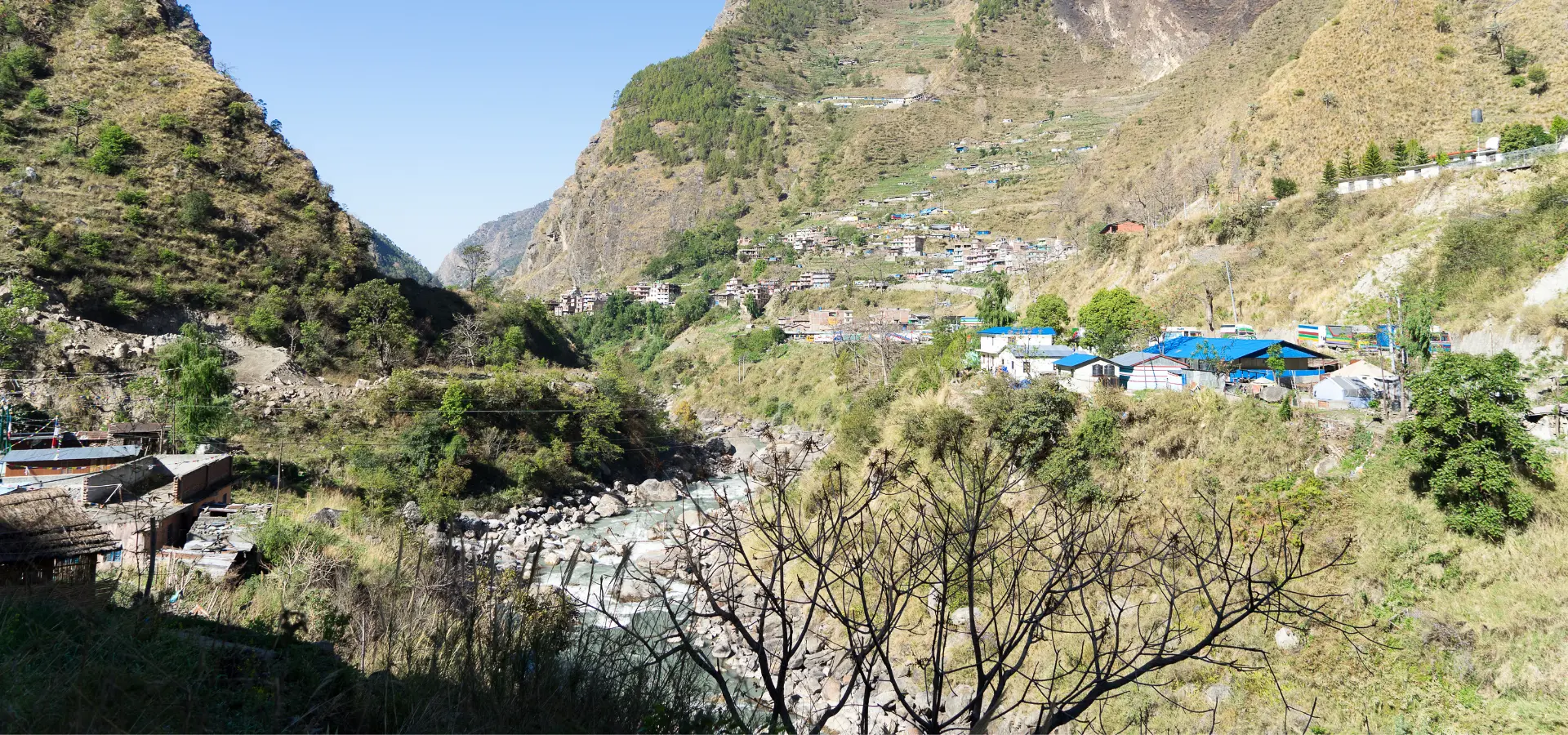
Each region presents its own unique floral tapestry, shaped by dramatic elevation changes and microclimates. The Annapurna region transforms into a rhododendron wonderland each spring, with the Ghorepani-Poon Hill trek offering particularly stunning displays of crimson and pink blooms against snow-capped peaks. Venturing east, the remote Makalu-Barun Valley reveals an astonishing biodiversity hotspot. You will experience subtropical rainforests dripping with orchids gradually give way to alpine meadows dotted with rare medicinal herbs and the majestic snow lotus.
Closer to Kathmandu, Shivapuri-Nagarjun National Park provides accessible trails through mixed forests with towering Schima trees. For true wilderness seekers, the Kanchenjunga region in the far east offers pristine landscapes. Here, wild magnolias and carpets of wild strawberries flourish in untouched valleys. Meanwhile, western Nepal’s Rara National Park combines stunning lake vistas with alpine meadows bursting with iris and potentilla blooms.
Each season unveils new floral treasures, from spring’s explosive rhododendron displays to autumn’s golden hues framing hardy alpine specialists. These destinations not only showcase Nepal’s incredible plant diversity but also offer opportunities to learn about traditional herbal medicine and conservation efforts. Whether you are an avid botanist, photographer, or simply a nature lover, Nepal’s varied botanical landscapes promise unforgettable encounters.
Reviews on Botanical Treks in Nepal | 9 Days Itinerary
Be first to post a review in this trip.