


Trip Introduction
Overview of Chitwan Jungle Safari
A 3 Days Chitwan Jungle Safari Package is ideal for those who want to experience Nepal’s wildlife, jungle landscapes, and Tharu culture without spending too many days. In 3 days, you can combine a full day of wildlife activities with canoeing, nature walks, and cultural experiences. You can also enjoy 2 nights in Chitwan’s peaceful surroundings.
Chitwan National Park is home to one-horned rhinoceroses, Royal Bengal tigers, deer, crocodiles, and hundreds of bird species. Activities such as jeep safaris, canoe rides, jungle walks, and Tharu cultural experiences make it more than just a wildlife destination.
Here are the main reasons why this Chitwan Jungle Safari Package for 3 days itinerary works well for you.
1. Enough Time for Chitwan Jungle Safari Package
Three days give you enough time to experience several sides of Chitwan rather than visiting the park for only a few hours.
Depending on your itinerary, you can enjoy a Jeep safari, canoe ride, nature or jungle walk, birdwatching, and a Tharu cultural experience. These activities offer different ways of experiencing the park and its wildlife. The Nepal Tourism Board also describes a typical 2-night/3-day Chitwan safari as combining wildlife safaris, canoeing, a Tharu village visit, and nature walks.
A Jeep safari allows you to cover more ground in search of larger wildlife. The canoe ride offers a quieter perspective of the rivers and wetlands where crocodiles and waterbirds can be found. A nature walk provides an opportunity to observe smaller wildlife, plants, tracks, and birds with a trained guide.
Rather than rushing through several activities in a single afternoon, the itinerary is spread across your arrival day, a full activity day, and your departure morning.
2. Full Day Dedicated to Wildlife
The biggest advantage of staying for 2 nights is having one full day available for jungle activities.
Instead of arriving in Chitwan, doing one short activity and immediately leaving, you can dedicate the second day primarily to wildlife exploration. An early start can be particularly useful for wildlife viewing, followed by activities such as canoeing, nature walks, or a Jeep safari later in the day, depending on the final itinerary.
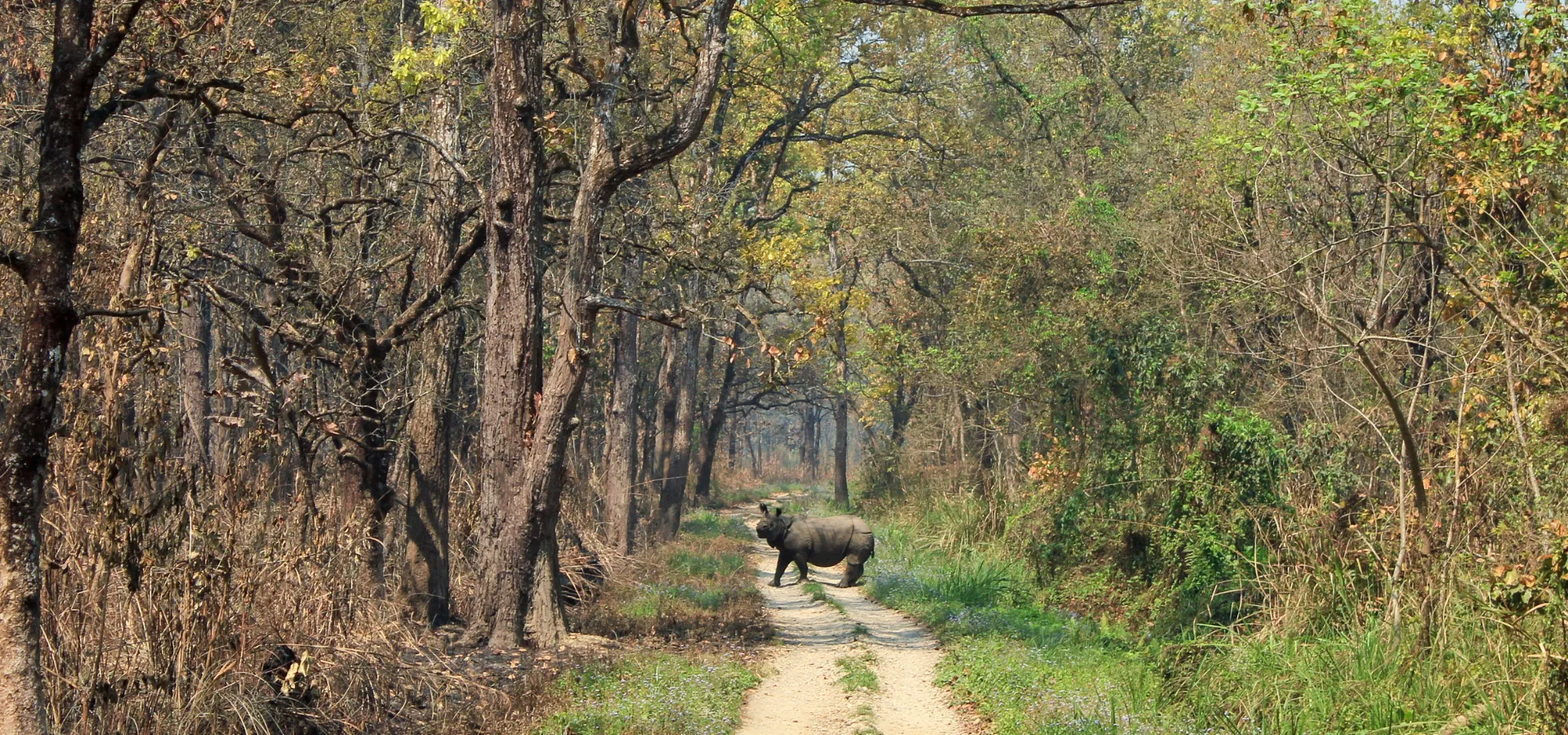
Chitwan’s wildlife includes the greater one-horned rhinoceros, Royal Bengal tiger, gaur, deer, wild boar, leopard, sloth bear, monkeys, crocodiles, and numerous bird species. The Nepal Tourism Board currently lists 56 mammal species and 525 bird species in the park.
However, wildlife sightings are never guaranteed. A good Chitwan safari is about exploring the animals’ natural habitat rather than expecting a guaranteed encounter with a particular species.
This full-day structure is especially useful for photographers, families, and first-time visitors who want more than a quick jungle drive.
3. Two Nights in the Jungle Environment
Two nights give you enough time to settle into the atmosphere of Chitwan.
Most visitors stay in or around Sauraha, one of Chitwan’s main tourism hubs, where hotels, lodges, resorts, restaurants, and cultural experiences are concentrated. Sauraha also sits beside the Rapti River, making it possible to enjoy a quieter evening after your jungle activities.
The first evening gives you time to experience the local surroundings, visit a nearby village, or enjoy a cultural program. The second night means you can spend the following day focused on wildlife without needing to leave Chitwan immediately afterward.
For travelers coming from Kathmandu or Pokhara, this two-night stay creates a better balance between travel time and actual time spent experiencing the destination.
4. Cultural Experience Is Part of the Journey
Chitwan is not only about wildlife. The region is also home to the Tharu community, whose traditional lifestyle, architecture, food, music, and cultural practices are an important part of the destination.
A Chitwan tour can include a visit to a Tharu village or a cultural program, allowing you to experience a side of the region that a safari alone cannot provide. The Nepal Tourism Board highlights Tharu village visits and cultural experiences as part of the Chitwan experience.
This combination of wildlife and local culture makes a 2-night, 3-day tour more varied than a simple safari package.
You can spend the day looking for rhinos and birds in the jungle and the evening learning about the communities that have lived in and around the Chitwan landscape for generations.
5. Ideal for Travelers With Limited Time in Nepal
Not everyone visiting Nepal has enough time for a multi-week trek or an extended wildlife holiday.
A 2-night, 3-day Chitwan tour fits easily into a short Nepal itinerary while still providing a genuine jungle experience.
It works particularly well for those who have:
- 5–7 days in Nepal
- A short holiday from India or another nearby country
- A business trip with a few additional days
- A Nepal itinerary focused on Kathmandu and Pokhara
- No interest in trekking
- Limited time but still want to experience Nepal’s wildlife
Chitwan is also relatively accessible compared with Nepal’s high-altitude trekking destinations. The Nepal Tourism Board identifies Bharatpur as the nearest major air gateway and lists road access from Kathmandu as well.
This makes Chitwan a practical addition to a Nepal itinerary without major changes to travel plans.
6. Easy to Combine With Kathmandu or Pokhara
One of the strongest advantages of this short package is its flexibility.
You can combine the 2 Night 3 Days Chitwan Jungle Safari Package for a mixture of cultural sightseeing and wildlife.
For example:
Kathmandu + Chitwan
Explore Kathmandu’s UNESCO heritage sites and cultural attractions before heading south to experience Nepal’s jungle and wildlife.
Pokhara + Chitwan
Combine the mountains, lakes, and adventure activities of Pokhara with the wildlife and cultural experiences of Chitwan.
Kathmandu + Pokhara + Chitwan
For those with approximately 1 week or more, combining all 3 destinations provides a well-rounded introduction to Nepal: heritage, mountains, wildlife, and local culture.
Because Chitwan is located in Nepal’s Inner Terai and is connected to both Kathmandu and Pokhara by road networks, it can be incorporated into a larger itinerary without requiring a separate long holiday.
7. No Trekking Fitness Required
Unlike Nepal’s Himalayan trekking routes, a Chitwan National Park tour does not require high-altitude trekking fitness.
You don’t need to train for steep mountain climbs, carry trekking equipment, or acclimatize to high elevations. Most activities take place in the lowland Terai environment, where the primary considerations are heat, humidity, walking comfort, and following wildlife-safety instructions.
That makes this tour suitable for a much wider range of travelers, including:
- Families with children
- Couples
- Older travelers who are comfortable with moderate walking
- First-time visitors to Nepal
- Travelers who do not enjoy trekking
- Wildlife enthusiasts
- Photographers
- Birdwatchers
However, “no trekking fitness required” does not mean that every activity is completely effortless. Jungle walks can involve uneven terrain, and the subtropical climate can become hot and humid, particularly outside the cooler months. The Nepal Tourism Board describes Chitwan’s climate as subtropical, with hot summers and mild winters.
Is 2 Nights and 3 Days Enough for Chitwan?
Yes, for a first visit, 2 nights and 3 days is generally enough to experience the main attractions of Chitwan National Park. It provides time for multiple jungle activities, a full wildlife-focused day, a cultural experience, and two nights in the Chitwan area.
If you want a slower holiday, additional birdwatching, more wildlife drives, or more time at your resort, a longer 4-night/5-day Chitwan itinerary may be more appropriate.
However, 2-night/3-day will be enough for those with limited time. The format offers a practical balance between travel time, wildlife activities, cultural experiences, and relaxation.
Who Is This Chitwan Jungle Safari Package For?
The 2 Night 3 Days Chitwan National Park Tour is particularly suitable for those who want a short, comfortable, and activity-filled wildlife experience in Nepal.
It is a strong choice for families, couples, first-time Nepal visitors, photographers, birdwatchers, and travelers combining Chitwan with Kathmandu or Pokhara.
The key advantage is simple: you don’t need weeks in Nepal to experience the country’s wildlife. 3 days can give you a meaningful introduction to Chitwan’s jungle, wildlife, rivers, and Tharu culture.
Itinerary of Chitwan Jungle Safari
Driving: 5–6 hours by tourist bus
Flight option: Around 20–25 minutes to Bharatpur
Accommodation: Jungle lodge/resort in Sauraha
Your Chitwan Jungle Safari Package begins with a scenic journey from Kathmandu or Pokhara to Sauraha. You can travel by tourist bus or choose a flight to Bharatpur Airport, followed by a short road transfer to your lodge.
After arriving in Sauraha, check into your jungle lodge and enjoy lunch. Take some time to freshen up and relax before heading out to explore the surrounding area.
In the afternoon, visit a Tharu village and museum to learn about the indigenous Tharu community and its traditional way of life. You can see traditional houses, learn about local customs, and discover how communities in the Chitwan region have traditionally lived alongside the surrounding forests and rivers.
As evening approaches, return to Sauraha and enjoy a Tharu cultural performance. Traditional dances and music provide an entertaining introduction to the region’s cultural heritage.
After dinner at the lodge, spend your first night in Sauraha. The peaceful jungle surroundings prepare you for the main wildlife adventure waiting on Day 2.
Day 1 Highlights:
- Scenic journey to Chitwan
- Check-in at a jungle lodge
- Tharu village experience
- Tharu cultural and traditional activities
- Evening cultural performance
- Overnight stay in Sauraha
Activities: Canoeing, Elephant Breeding Center visit, Jeep safari
Accommodation: Jungle lodge/resort
Meals: Breakfast, Lunch, and Dinner
Day 2 is the main wildlife day of your Chitwan tour. Starting early allows you to experience the park when the jungle is cooler and wildlife activity can be more noticeable.
Morning: Canoeing on the Rapti River
After breakfast, begin the day with a peaceful canoe ride along the Rapti River.
As the canoe moves quietly through the water, look along the riverbanks for mugger crocodiles, gharials, and waterbirds. The surrounding wetlands and forests also provide opportunities to observe kingfishers, herons, and other bird species.
Canoeing offers a completely different perspective of Chitwan compared with a Jeep safari. Instead of driving through the forest, you experience the river ecosystem at a slower and quieter pace.
Visit the Elephant Breeding Center
Continue to the Elephant Breeding Center in the Sauraha area, where you can learn about the management and breeding of Asian elephants.
The visit provides an opportunity to understand the role of elephants in conservation and to observe elephants at the center. Availability and visiting arrangements can vary, so the activity should be confirmed as part of your final itinerary.
Midday: Lunch & Rest
Return to your lodge for lunch and some time to relax.
The middle of the day can be hot, particularly during the warmer months, so taking a break before the afternoon safari makes the experience more comfortable.
Afternoon: Jeep Safari in Chitwan National Park
After lunch, set out for the main adventure of the day: a Jeep safari inside Chitwan National Park.
The Jeep takes you through a mixture of sal forests, grasslands, wetlands, and riverine habitats, allowing you to explore different ecosystems within the park.
Keep your eyes open for wildlife such as
- One-horned rhinoceros
- Spotted deer
- Sambar deer
- Wild boar
- Gaur
- Monkeys and langurs
- Crocodiles
- Sloth bears
- Leopards
- Numerous bird species
- Bengal tigers, although sightings are never guaranteed
Your experienced nature guide will help identify wildlife, animal tracks, and interesting features of the jungle.
The purpose of a safari is to observe wildlife in its natural habitat, so sightings depend on animal movement, weather, season, and luck. Rather than chasing a particular animal, the experience focuses on exploring the park and understanding its diverse ecosystem.
Optional Activities
Depending on availability, season, and local regulations, additional activities may be possible. These should be confirmed with your tour operator before participating.
Evening: Sunset by the Rapti River
After your jungle activities, return toward Sauraha and spend some quiet time beside the Rapti River.
The riverbank is a relaxing place to watch the sun set over the surrounding landscape. After a full day in the jungle, this is a chance to slow down, enjoy the scenery, and reflect on the day’s wildlife encounters.
Return to your lodge for dinner and your second night in Chitwan.
Day 2 Highlights:
- Early morning jungle activities
- Canoe ride on the Rapti River
- Elephant Breeding Center visit
- Lunch and afternoon rest
- Jeep safari inside Chitwan National Park
- Wildlife and birdwatching
- Sunset by the Rapti River
- Overnight stay in Sauraha
Activities: Sunrise/optional morning activity
Transportation: Tourist bus or private transfer
Meals: Breakfast
Wake up early on your final morning to experience the quieter side of Chitwan.
If time and local conditions permit, you can take a short morning nature walk or birdwatching activity before returning to the lodge. Early morning is particularly pleasant for observing birds and enjoying the peaceful atmosphere around Sauraha.
Return to the lodge for breakfast and prepare for departure.
After breakfast, check out and begin your journey back to Kathmandu or Pokhara by tourist bus or arranged private transportation. Travelers with additional time can also extend their stay and explore more of Chitwan’s activities.
Your 2 Nights 3 Days Chitwan National Park Tour ends with your departure from Chitwan, leaving you with experiences of Nepal’s wildlife, jungle landscapes, and Tharu culture.
Day 3 Highlights:
- Early morning nature experience
- Birdwatching opportunity
- Breakfast at the lodge
- Check-out
- Return journey to Kathmandu or Pokhara
Includes/Excludes
What's Included?
- Round-trip transfers to and from Sauraha, Chitwan.
- 2 nights of accommodation in a safari lodge on a twin/double-sharing basis.
- 2 breakfasts, 2 lunches, and 2 dinners.
- Services of a local nature guide during jungle activities.
- Chitwan National Park entrance fee.
- Canoe ride and elephant-back safari fees.
- Entrance ticket for the Tharu Cultural Show.
- Guide’s wages, accommodation, and meals.
What's Excluded?
- Drinks and beverages, including soft drinks such as Coke, Fanta, and Sprite, as well as alcoholic drinks.
- Meals and accommodation in Kathmandu or Pokhara.
- Travel insurance and personal trekking/travel gear.
- Any additional costs resulting from extending the trip or adding extra activities.
- Tips for your guide, driver, lodge staff, and waiters.
- Any applicable taxes, insurance, or other personal expenses related to the guide
Essential Information - Chitwan Jungle Safari
Is Chitwan National Park Safe?
Yes, a Chitwan National Park tour is generally suitable for tourists, families, and first-time wildlife travelers when you follow park regulations and the instructions of your nature guide. The main safety consideration is not the jungle itself but maintaining an appropriate distance from wildlife and following the rules for safari, walking, and canoe activities.
Chitwan is a protected wildlife habitat rather than a conventional zoo. Animals move freely through forests, grasslands, and wetlands, so sightings are unpredictable, and encounters need to be treated with caution. The park is home to one-horned rhinoceroses, Bengal tigers, leopards, wild boars, deer, crocodiles, gharials, and many other species.
During a Jeep safari, remain inside the vehicle unless your guide specifically tells you that it is safe to get out. Never attempt to approach, feed, call, or photograph wildlife from an unsafe distance.
Jungle walks require even greater attention. Unlike a Jeep safari, walking puts visitors directly into the animals’ habitat. Always stay with your trained nature guide and follow instructions about when to stop, remain quiet, or change direction.
Important Chitwan Safari Safety Tips
- Never approach wild animals.
- Do not attempt to feed wildlife.
- Stay with your guide during jungle walks.
- Follow the designated safari route.
- Do not shout or make unnecessary noise around animals.
- Do not leave a Jeep without permission from the guide.
- Avoid using flash photography unnecessarily.
- Keep children close to parents or guardians.
- Follow all national park instructions.
- Do not enter restricted areas.
- Avoid carrying food openly during wildlife activities.
- Respect the recommended distance from animals.
The park’s management and visitor regulations emphasize responsible behavior around wildlife and minimizing disturbance, noise, and other tourism impacts.
Is Chitwan Safe for Solo Travelers?
Yes, solo travelers can visit Chitwan, but joining an organized safari or hiring a qualified naturalist is most for jungle activities. A guide understands animal behavior, tracks wildlife, and knows the designated routes better than an independent visitor.
Wildlife & Jungle Safari Safety Rules
A jungle safari is different from visiting a conventional tourist attraction. Chitwan National Park protects wildlife in its natural habitat, so responsible behavior is essential.
The most important rule is simple: observe wildlife without disturbing it.
During a Jeep Safari
Stay inside the Jeep unless your guide gives permission to exit. Keep your voice low and avoid sudden movements when wildlife is nearby. Do not ask the driver to chase an animal for a better photograph.
A good wildlife experience is not measured by how close you get to a rhino or tiger. It is measured by observing animals behaving naturally.
During a Jungle Walk
Never walk alone inside the national park or attempt to follow an animal.
Your nature guide should determine the route and how close you can safely approach wildlife. If the guide asks the group to remain still or move away, follow the instruction immediately.
During Canoeing
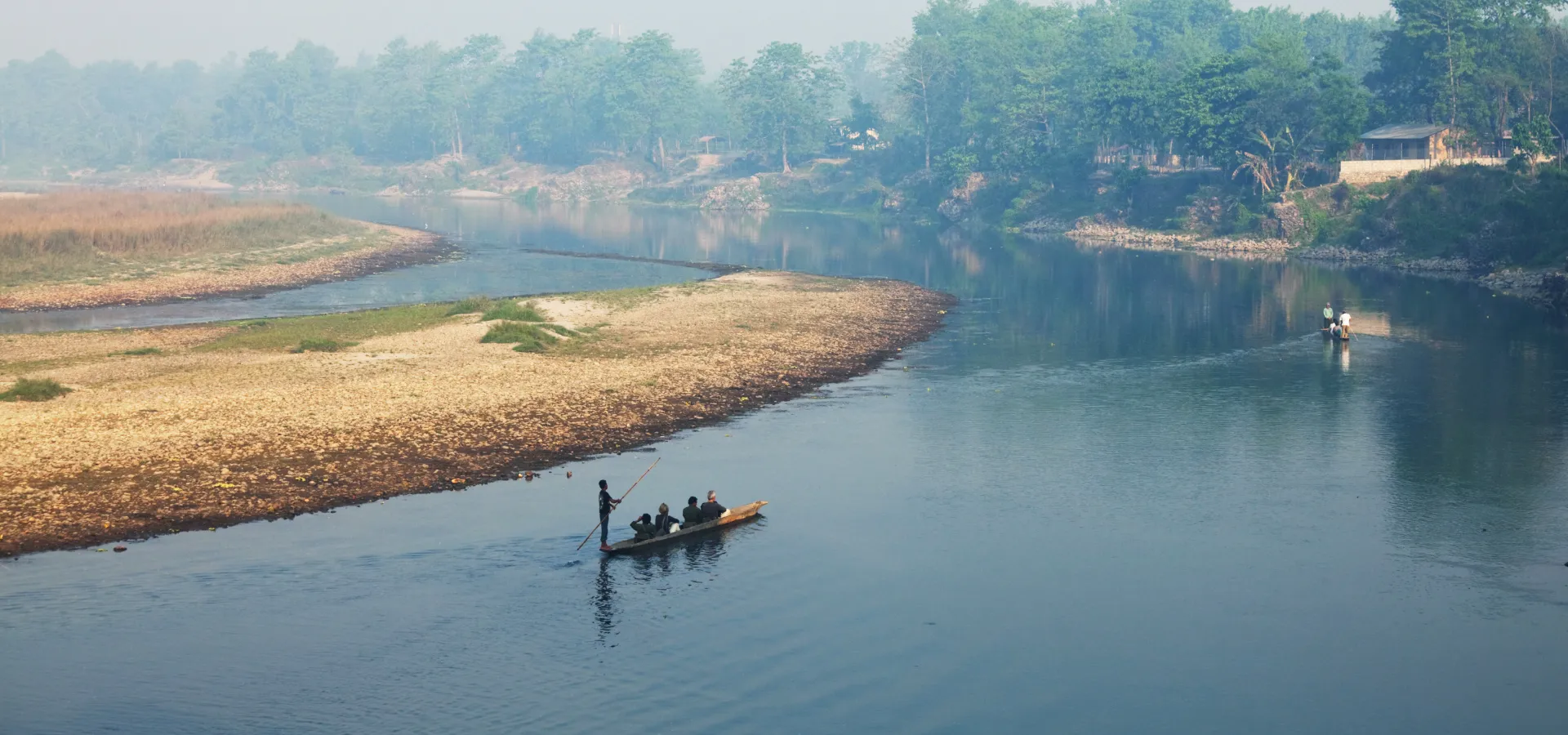
Wear the recommended safety equipment and remain seated as instructed. Do not lean excessively over the side of the canoe to photograph crocodiles or birds.
The rivers and wetlands of Chitwan are important habitats for mugger crocodiles and gharials, so wildlife should be observed from a safe distance.
Wildlife Photography Etiquette
Wildlife photography is one of the attractions of Chitwan, but photography should never take priority over animal welfare.
Avoid:
- Flashing animals at close range
- Shouting to make animals look toward the camera
- Asking a driver to pursue wildlife
- Blocking an animal’s movement
- Getting out of a vehicle without authorization
- Throwing food to attract animals
The best photographs often come from patience rather than proximity.
Responsible & Sustainable Tourism in Chitwan
Chitwan National Park is not simply a safari destination; it is a protected ecosystem with important conservation and community values. The park was designated a UNESCO Natural World Heritage Site in 1984 and covers approximately 932 square kilometers.
A responsible Chitwan tour should therefore benefit local communities while minimizing disturbance to wildlife and the environment.
Respect Wildlife
Never feed animals or attempt to touch them. Wildlife should remain wild, and visitors should observe animals without changing their behavior.
Reduce Plastic Waste
Carry a reusable water bottle and avoid unnecessary single-use plastics. Never leave wrappers, bottles, or other waste inside the park.
Support Local Communities
Where possible, choose locally operated guides, restaurants, handicraft shops, and cultural experiences. Spending money locally helps tourism contribute to communities around the park.
Respect Tharu Culture
The Tharu people have a deep cultural connection with the Chitwan region. When visiting villages or attending cultural performances, behave respectfully and ask permission before taking close-up photographs of people.
Avoid Wildlife Products
Do not purchase products made from illegal wildlife parts, skins, bones, teeth, or other protected animal materials.
Follow Park Regulations
Visitors should follow all current park regulations and instructions from authorized guides and park officials. Protected areas need rules because uncontrolled tourism can create noise, dust, waste, and disturbance to wildlife. Chitwan’s management planning specifically recognizes the need to minimize tourism impacts and regulate tourism activities.
Why Responsible Tourism Matters
The objective of a Chitwan safari should not be to see as many animals as possible at any cost. A better approach is to experience the ecosystem while leaving as little disturbance as possible.
Chitwan With Children
Chitwan National Park is one of the easier destinations in Nepal for families traveling with children. Unlike high-altitude trekking, a jungle safari does not require extensive physical training or acclimatization.
The Nepal Tourism Board specifically describes Chitwan’s jungle activities as family-friendly experiences, including opportunities to see rhinos, elephants, deer, and potentially tigers in the wild.
Why Chitwan Is Good for Families
Children can experience:
- Jeep safaris
- Canoe rides
- Birdwatching
- Nature walks
- Tharu cultural experiences
- Wildlife education
- Visits to conservation centers
- Village activities
The variety is useful because children do not have to spend the entire day inside a vehicle.
Is a 2-Night 3-Day Chitwan Tour Enough for Families?
Yes. Two nights and three days provide a good introduction to Chitwan without making the trip excessively long.
A typical family itinerary can combine:
Day 1: Arrival, resort check-in, village experience, and cultural program.
Day 2: Canoeing, wildlife activity, and Jeep safari.
Day 3: Morning nature activity followed by departure.
The exact activities should be adjusted according to the children’s ages, weather, and the operating schedule of the park and local activity providers.
Tips for Traveling to Chitwan With Children
Bring:
- Comfortable walking shoes
- Sun hat
- Sunscreen
- Insect repellent
- Reusable water bottle
- Light clothing
- A light jacket during winter
- Binoculars
- Camera
- Necessary child-specific medicines
During safari activities, children should remain with their parents or guardians and follow the guide’s instructions.
Best Age for Chitwan Safari
There is no single minimum age that makes Chitwan appropriate for every child. The more important factors are the child’s ability to follow instructions, tolerate heat, and remain reasonably quiet during wildlife activities.
For very young children, a private vehicle and a flexible itinerary may be more comfortable than a tightly scheduled group tour.
Chitwan for Couples
Chitwan is a good addition to a Nepal itinerary for couples who want something different from mountain trekking, temples, and city sightseeing.
Instead of spending the entire trip around urban attractions, couples can stay at a jungle lodge or resort, explore the forest and wetlands, watch wildlife, and experience the local culture.
Things Couples Can Do in Chitwan
A couple’s Chitwan itinerary can include:
- Private Jeep safari
- Canoe ride
- Jungle walk with a naturalist
- Birdwatching
- Tharu village visit
- Sunset experience around the Rapti River area
- Cultural performance
- Relaxing at a jungle resort
Why Choose Chitwan for a Couple’s Trip?
The destination works particularly well for couples who want a slower experience after trekking in the Himalayas.
For example:
Everest Base Camp → Kathmandu → Chitwan
or
Annapurna Circuit → Pokhara → Chitwan
can provide a natural transition from physically demanding mountain travel to a relaxed wildlife experience.
Couples should consider a private Jeep safari if photography, flexibility, and a quieter experience are more important than minimizing cost.
Chitwan for Birdwatchers
Chitwan National Park is not only a destination for rhino and tiger sightings. It is also one of Nepal’s important birdwatching destinations.
The Nepal Tourism Board currently lists 525 bird species in Chitwan, including resident and migratory species. The park’s forests, grasslands, rivers, wetlands, and oxbow lakes provide different habitats for birds.
Birds You May See in Chitwan
Depending on season and habitat, birdwatchers may encounter:
- Hornbills
- Woodpeckers
- Bengal florican
- Red-headed trogon
- Paradise flycatcher
- Indian pitta
- Parakeets
- Brahminy ducks
- Pintails
- Bar-headed geese
- Cormorants
- Storks
- Raptors
- Kingfishers
Migratory waterbirds become particularly relevant during the cooler months, while summer brings different migrant and breeding species.
Best Time for Birdwatching in Chitwan
October through March is generally the most comfortable season for visitors, while winter also brings migratory waterbirds. The Nepal Tourism Board identifies October–March as Chitwan’s best general visiting season.
For serious birdwatchers, an early-morning birding excursion with a knowledgeable naturalist is preferable to relying only on a standard Jeep safari.
What Should Birdwatchers Bring?
- Binoculars
- Camera with telephoto lens
- Extra batteries
- Field guide or bird identification app
- Notebook
- Neutral-colored clothing
- Sun protection
- Insect repellent
Early mornings are generally better for bird activity, so birdwatchers should consider arranging an early start with their guide.
Chitwan National Park vs Bardia National Park
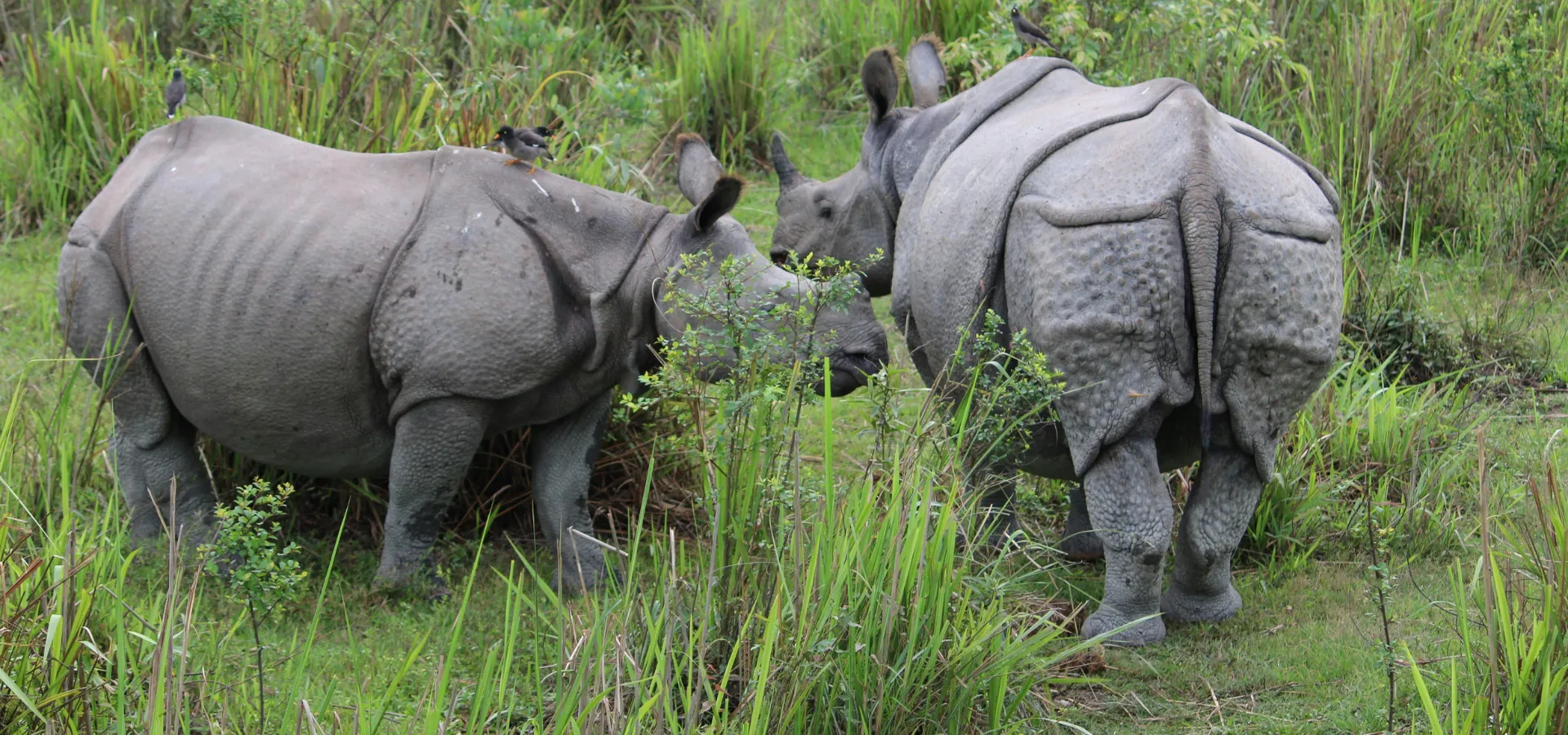
Those who want a wildlife experience in Nepal often compare Chitwan National Park and Bardia National Park.
Both parks provide opportunities for wildlife viewing, jeep safaris, jungle walks, and other nature-based experiences, but they offer different travel experiences.
| Feature | Chitwan National Park | Bardia National Park |
| Location | Southern-central Nepal | Far western Nepal |
| Accessibility | Easier from Kathmandu and Pokhara | More remote |
| Main tourist hub | Sauraha and surrounding areas | Thakurdwara |
| Wildlife | Rhino, tiger, deer, crocodiles, and many others | Tiger, rhino, elephant, swamp deer and others |
| Birdwatching | Excellent | Excellent |
| Tourism infrastructure | More developed | Generally quieter |
| Ideal trip length | 2–3 nights works well | Better with additional travel time |
| Best for | First-time Nepal wildlife trip | Quieter, more remote safari experience |
The Nepal Tourism Board describes Chitwan as a major wildlife destination with 56 mammal species and 525 bird species, while its Bardia information highlights the park’s large forest and grassland habitats, tiger population, rhinos, elephants, and other wildlife.
Choose Chitwan if:
- You have limited time.
- You are visiting Nepal for the first time.
- You want easier access from Kathmandu.
- You are traveling with children.
- You want a combination of wildlife and Tharu culture.
- You want a wider choice of accommodation and tourism facilities.
Choose Bardia if:
- You have more time.
- You prefer a quieter destination.
- You want a more remote western Nepal experience.
- Wildlife is the primary focus of your trip.
- You are willing to spend more time traveling to the destination.
Which Is Better for Tiger Sightings?
It is not accurate to promise tiger sightings in either park. Wildlife is unpredictable.
The Nepal Tourism Board highlights Bardia for its tiger habitat and reports more frequent tiger sightings there than in other national parks, while Chitwan also supports a significant tiger population.
Therefore, the choice should depend on the overall travel experience you want rather than a guaranteed animal sighting.
For most travelers with only a few days available, Chitwan is the more practical choice because of its accessibility and established tourism infrastructure.
3 Days vs. 5 Days Chitwan National Park Tour
The right duration depends on whether you want a short wildlife introduction or a slower, more comprehensive experience.
A 2-night/3-day Chitwan tour suits you with limited time in Nepal who still want to experience the park’s major activities.
A 4-night/5-day Chitwan tour is better for those who want additional time for wildlife activities, birdwatching, relaxation, and cultural experiences.
2 Nights 3 Days Chitwan Tour
This is the better option for:
- First-time visitors
- Short Nepal holidays
- Families with limited vacation time
- Combining Chitwan with Kathmandu
- Combining Chitwan with Pokhara
- The main safari experiences without a long stay
A practical structure is
Day 1: Travel to Chitwan, check in, and do a village/cultural experience.
Day 2: Full day of wildlife activities, including a Jeep safari and other scheduled activities.
Day 3: Morning activity and departure.
This is enough to experience the core attractions of Chitwan, but the schedule is relatively compact.
4 Nights 5 Days Chitwan Tour
The longer option is better for those who prefer a slower pace.
Additional time allows you to:
- Repeat wildlife activities
- Spend more time birdwatching
- Explore different habitats
- Add additional cultural experiences
- Relax at the resort
- Allow more flexibility if weather affects an activity
- Enjoy the destination without rushing between activities
Which Chitwan Tour Should You Choose?
Choose 2 nights/3 days if your main priority is experiencing Chitwan efficiently.
Choose 4 nights/5 days if wildlife, photography, birdwatching, and relaxation are major reasons for your visit.
For travelers combining Chitwan with a broader Nepal itinerary, the shorter package is often more practical.
For travelers specifically visiting Chitwan for wildlife and nature, the longer stay provides more flexibility.
A three-day itinerary should therefore not be marketed as the only way to experience Chitwan. Position it as an efficient introduction to the national park, while the longer package should target you who want a deeper wildlife and nature experience.
Most asked questions
FAQs about Chitwan Jungle Safari
Yes, 2 nights and 3 days is enough to experience the major attractions and activities of Chitwan National Park. This duration gives you time for a Jeep safari, canoe ride, jungle or nature walk, birdwatching, a Tharu cultural experience, and time to relax at your jungle lodge or resort.
A typical 3-day Chitwan itinerary includes arrival and cultural activities on the first day, a full day of wildlife activities on the second day, and a morning nature activity before departure on the third day. It is a good choice for those who have limited time in Nepal and want to combine Chitwan with Kathmandu or Pokhara.
If you want more time for wildlife photography, birdwatching, repeated safaris, or relaxation, a 4-night, 5-day Chitwan tour is a better option.
The best time to visit Chitwan National Park is generally from October to March. During these months, the weather is more comfortable for jungle safaris, nature walks, and other outdoor activities, while visibility is often favorable for wildlife viewing.
October and November offer pleasant temperatures following the monsoon, while December to February brings cooler mornings and generally clear conditions. March can become warmer but remains a popular period for wildlife activities.
April to June can be considerably hotter, while July to September is the monsoon period and heavy rainfall can affect roads and some outdoor activities.
For birdwatchers, the cooler months can also be particularly rewarding because migratory birds visit the wetlands and waterways of the park.
Yes, Bengal tigers live in Chitwan National Park, but a tiger sighting is never guaranteed. Chitwan is a natural habitat where animals move freely through forests, grasslands, and wetlands.
The likelihood of seeing a tiger depends on several factors, including season, weather, time of day, habitat conditions, animal movement, and simple luck. A knowledgeable nature guide can improve your chances by identifying animal tracks, signs, and suitable habitats, but no responsible tour operator should promise a tiger sighting.
Even if you do not see a tiger, Chitwan offers opportunities to observe one-horned rhinoceroses, deer, crocodiles, gharials, wild boar, monkeys, birds and many other species.
Chitwan National Park is home to a diverse range of wildlife. Some of the most notable animals you may encounter include
- One-horned rhinoceros
- Bengal tiger
- Leopard
- Sloth bear
- Gaur
- Wild boar
- Spotted deer
- Sambar deer
- Hog deer
- Rhesus macaque
- Hanuman langur
- Mugger crocodile
- Gharial
- Monitor lizard
- Various species of snakes
The park is also an important bird habitat, with hundreds of resident and migratory bird species.
Wildlife sightings depend on season, weather, habitat, and animal movement, so seeing a particular species cannot be guaranteed. The attraction of a Chitwan safari is experiencing wildlife in its natural environment rather than visiting a controlled enclosure.
Yes, Chitwan National Park is generally safe for tourists when visitors follow park regulations and the instructions of their guide or naturalist. However, Chitwan is a genuine wildlife habitat, so visitors need to maintain a safe distance from animals and behave responsibly.
During a Jeep safari, remain inside the vehicle unless your guide specifically tells you it is safe to get out. During jungle walks, stay with your guide and never approach wildlife independently.
Visitors should also avoid feeding animals, making excessive noise, chasing wildlife for photographs or entering restricted areas.
The most important rule is simple: observe wildlife without disturbing it.
Yes, Chitwan is one of the more family-friendly destinations in Nepal. Unlike Himalayan trekking destinations, a Chitwan tour does not require high-altitude acclimatization or strenuous trekking.
Children can enjoy activities such as
- Jeep safari
- Canoeing
- Birdwatching
- Nature walks
- Tharu cultural experiences
- Wildlife observation
- Village visits
Parents should supervise children during all activities, particularly during jungle walks, canoe rides and wildlife encounters. Very young children may find long safari drives tiring, so a private vehicle and a flexible itinerary can provide a more comfortable experience.
A 2-night, 3-day itinerary is also convenient for families because it provides a good introduction to Chitwan without requiring a long stay.
You can travel from Kathmandu to Chitwan by tourist bus, private vehicle, or flight.
By road, the usual route passes through Mugling and Narayanghat/Bharatpur before continuing toward Sauraha, the main tourist gateway to Chitwan National Park. Travel time varies considerably depending on traffic, road conditions, and construction, so it is better to allow flexibility rather than relying on an exact journey time.
Another option is to fly from Kathmandu to Bharatpur Airport and continue by road to Sauraha or your selected accommodation.
For travelers booking a package tour, private transportation can be arranged according to the itinerary and group size.
You can reach Chitwan from Pokhara by tourist bus, private vehicle, or other available transport connections.
The road route generally travels through the Mugling and Narayanghat area before continuing toward Chitwan and Sauraha. Road conditions and traffic can affect the journey, so you should allow sufficient time for the transfer.
Flying is another option where suitable flight connections are available, followed by a road transfer from Bharatpur to Sauraha.
If you are combining Pokhara and Chitwan in one Nepal itinerary, the two destinations work well together. Pokhara offers mountain scenery, lakes and adventure activities, while Chitwan provides wildlife and jungle experiences.
For a 2-night, 3-day Chitwan tour, pack lightweight and comfortable clothing suitable for outdoor activities. Your exact packing list should also reflect the season.
Essential items include:
- Comfortable walking shoes
- Lightweight clothing
- Sun hat or cap
- Sunglasses
- Sunscreen
- Insect repellent
- Reusable water bottle
- Personal medicines
- Camera
- Binoculars
- Power bank
- Small daypack
During the cooler winter months, bring a light jacket or warm layer because mornings and evenings can be chilly. During the wetter months, a lightweight rain jacket or poncho is useful.
For wildlife photography, binoculars, extra camera batteries, additional memory cards, and a telephoto lens can be particularly helpful.
Yes, the Jeep safari is included when it is specifically listed under the inclusions of the package. The exact safari arrangement can depend on the final itinerary, group size and current operating conditions.
A Jeep safari allows you to cover a larger area of the park than a walking excursion and provides opportunities to look for rhinoceros, deer, wild boar, birds and other wildlife.
Before booking, you should check whether the package price includes the Jeep, driver, nature guide, park entry fee, and other applicable charges. This is important because different Chitwan packages may include different combinations of activities and fees.
The Chitwan National Park entrance fee is included only if it is specifically stated in the package’s “What’s Included” section.
For international travelers, the park entry fee is a separate regulated cost and may change over time. Therefore, you should check the latest package inclusions and current government fees before booking.
A transparent Chitwan tour package should clearly state whether the following are included:
- National park entrance fee
- Jeep safari
- Nature guide
- Canoeing
- Accommodation
- Meals
- Transportation
- Cultural program
- Other activity entrance fees
This helps you understand the actual cost of the tour and avoid unexpected expenses.
Both Chitwan National Park and Bardia National Park offer excellent wildlife experiences, but they suit different types of travelers.
Chitwan is generally better for those who have limited time. It is easier to reach from Kathmandu and Pokhara and has a well-developed tourism infrastructure around Sauraha.
Bardia is better for those looking for a quieter and more remote wildlife experience. It is located in western Nepal and generally requires more travel time.
Choose Chitwan if you:
- Have only a few days available
- Are you visiting Nepal for the first time
- Want easier transportation
- Are traveling with children
- Want wildlife combined with Tharu culture
- Prefer a wider choice of accommodation
Choose Bardia if you:
- Have more time
- Prefer a quieter destination
- Want a more remote experience
- Are particularly interested in wildlife and nature
- Want to explore western Nepal
Neither destination can guarantee a tiger sighting. Wildlife viewing is unpredictable in both national parks.
For most first-time visitors, 2 nights and 3 days is a good minimum duration for Chitwan National Park. It provides enough time to experience several of the destination’s main activities without making the itinerary unnecessarily long.
A 3-day visit can include:
Day 1: Arrival in Chitwan, accommodation check-in, and cultural or village activities.
Day 2: Canoeing, nature activities, and Jeep safari.
Day 3: Morning wildlife or birdwatching activity followed by departure.
If wildlife photography, birdwatching, or relaxation is your primary reason for visiting, consider staying 4 nights and 5 days. The additional time allows more flexibility and opportunities to explore different habitats.
Yes, Chitwan can easily be combined with both Kathmandu and Pokhara to create a well-rounded Nepal holiday.
A popular route is
Kathmandu → Chitwan → Pokhara
This itinerary combines three very different experiences.
Kathmandu offers UNESCO-listed cultural heritage sites, temples, traditional architecture, and historic neighborhoods.
Chitwan provides jungle safaris, wildlife, birdwatching, and Tharu culture.
Pokhara offers lakes, mountain views, viewpoints, and adventure activities.
For those with around one week in Nepal, a Kathmandu–Chitwan–Pokhara itinerary can provide a good balance between culture, wildlife, and Himalayan scenery.
The itinerary can also be arranged in reverse:
Kathmandu → Pokhara → Chitwan → Kathmandu
The best route depends on your transportation arrangements, available time, and onward travel plans.
The main difference is the amount of time available for wildlife activities, relaxation, and exploration.
A 2-night, 3-day Chitwan tour is designed as a compact introduction to the national park. It is ideal for those with limited time who want to experience the major attractions, including a Jeep safari and cultural activities.
A 4-night, 5-day Chitwan tour provides a slower and more flexible experience. The additional time can be used for more wildlife activities, birdwatching, photography, cultural experiences, and relaxation at the resort.
If you are visiting Chitwan as part of a larger Nepal itinerary, the 2-night, 3-day package is usually the more practical choice. If Chitwan itself is a major focus of your trip, the longer itinerary gives you more time to experience the park without rushing.
Reviews on Chitwan Jungle Safari
Be first to post a review in this trip.